The post Birth Control After Baby – Side Effects appeared first on PregnancyBeyond.
]]>Birth Control After Baby – Side Effects

Birth Control After Baby: How does birth control actually work? How do I take birth control? What are the available types of birth control options? What birth control method is right for me? How do birth control pills work? What are the side effects of birth control pills? Which contraceptive methods suit me?
Are you concerned with any of the questions above? If yes, then you are certainly on the right page.
In this video, Labor & Delivery Nurse Chanie talks about the different aspects of birth control and the side effects of birth control pills.
She goes on to discuss the best methods through which you can initiate the birth control process.
Points covered include:
- Hormonal v Non-hormonal birth control Which birth control method is for you?
- Pros & Cons Contraindications and special considerations for moms who are breastfeeding.
Questions Answered include:
- Can birth control cause fertility problems?
- How soon after birth control can one get pregnant?
RELATED – Birth Control After Baby: Methods and Options
Birth Control After Baby – Side Effects
How does birth control actually work? How do I take birth control? What are the available types of birth control options? What birth control method is right for me? How do birth control pills work? What are the side effects of birth control pills? Which contraceptive methods suit me?
Are you concerned with any of the questions above? If yes, then you are certainly on the right page.
In this video, Labor & Delivery Nurse Chanie talks about the different aspects of birth control and the side effects of birth control pills.
She goes on to discuss the best methods through which you can initiate the birth control process. Points covered include: Hormonal v Non-hormonal birth control Which birth control method is for you? Pros & Cons Contraindications and special considerations for moms who are breastfeeding. Questions Answered include: Can birth control cause fertility problems? How soon after birth control can one get pregnant?
Join us over at the PB Moms Exclusive Circle. Where we invite healthcare experts to prepare us for life after childbirth and motherhood. Go to: pregnancybeyond.com/exclusive-circle.
Follow PregnancyBeyond on Instagram, Facebook, and Twitter.
The post Birth Control After Baby – Side Effects appeared first on PregnancyBeyond.
]]>The post Reasons To Call Your Doctor For Your Newborn appeared first on PregnancyBeyond.
]]>Top 6 Reasons To Call Your Doctor For Your Newborn
- Fever
- Jaundice
- Vomiting
- Urine output
- Poopy Diaper
- your newborn isn’t having a daily BM in the first few weeks of life.
More details in the video below
PRESS PLAY
DON’T FORGET TO SUBSCRIBE TO OUR YOUTUBE CHANNELS FOR MORE VIDEOS
Reasons To Call Your Doctor For Your Newborn
There are some important newborn essentials that you need to keep in mind in your maternal newborn nursing stage. Newborn baby care(at home) and newborn assessment should surely be at the top of your priority list. You must make sure that problems like intense newborn baby crying is properly addressed. Moreover, you must invigilate your newborn baby’s routine to avoid any such issues. Stressing it further, we have created a video in which we have mentioned six instances when you should definitely call the pediatrician. You should definitely watch it to make yourself aware of the problems that might occur in your parenting journey.
Don’t forget to subscribe to our Youtube Channel for more videos.
Join us over at the PB Moms Exclusive Circle, where we invite healthcare experts to prepare us for life after childbirth and motherhood. Go to: pregnancybeyond.com/exclusive-circle
Read More: Caring for Your Newborn.
The post Reasons To Call Your Doctor For Your Newborn appeared first on PregnancyBeyond.
]]>The post Postpartum Psychosis – First 24 Hours of Postpartum appeared first on PregnancyBeyond.
]]>
Postpartum Psychosis:
Postpartum psychosis By Hanna Murray, Labor & Delivery Nurse.
Ahhh the birth of your baby, such an exciting and happy time! Women usually prepare a lot for the actual birth, but some don’t realize to prepare for postpartum. Do you know what happens in the first 24 hours after delivery? It’s a huge change for both you and your baby. So read on to find out more about Postpartum Psychosis.
All written by a seasoned labor and delivery nurse about Postpartum Psychosis. She has helped hundreds of women in the postpartum period. Plus, learn some helpful tips to deal with that first eventful day.
What Physiological Changes Happen to Your Baby?
Right after your baby comes out they take their first breath. Before they come out of your uterus, their lungs are filled with fluid. That first breath pushes most of the fluid out of the lungs and they can fill with air! This happens very fast, and although the baby has been practicing for a while, it’s a huge change for them.
Their whole world has changed at this point. Everything is brighter, louder, drier, and just plain strange!
That is why you will become a safe spot. When babies are close to their mothers, they feel safe. Don’t be surprised if your little baby doesn’t want to sleep alone in the bassinet. It’s just too foreign to them! They are used to being rocked to sleep in the warm, dark cave that your uterus was to them.
This doesn’t mean that you will spoil your baby. Hold them as much as you can in the beginning, and skin-to-skin is the ideal way to hold them.
Skin-to-Skin Should Start Right Away:
If your baby comes out crying and healthy, start skin-to-skin right from the start. This will help to maintain their temperature. It will also help to maintain their blood sugar and make it so they will breastfeed sooner and with more ease. The doctors or nurses might want to take your baby and get them examined, but please ask them to wait. Skin-to-skin is more important at this time.
As long as your baby is healthy, breathing well, and has normal vitals, tell your providers that you want to continue to do skin-to-skin for as long as possible and ideally for at least one hour after birth and until the baby has had its first full feed at the breast.

Ask Your Visitors to Stay at Home.
If you are breastfeeding, your baby will have its first feed in the first couple of hours after birth. After that, most babies have a nice long sleep, so this is when you (and your partner if you have one) need to rest as much as you can. You will probably be exhausted from birth and you need your rest! Please ask all visitors to come AFTER this important rest period. If you feel uncomfortable telling them to leave, your nurse will have no problem letting them know that now is the time to leave!
The first 24 hours, your baby will be more sleepy so this is prime time for you to catch up on sleep. Sleep is so important for your milk supply and for your healing after birth. Don’t skimp on sleep! After the first 24 hours, babies tend to wake up more and want to eat more, so it would be ideal if you have gotten more rest so that you can deal with this period of fussiness in your newborn.
What happens to you physiologically right after birth?
Once your baby is out your uterus keeps contracting. Eventually, you will birth the placenta as well. Once the placenta is out, your providers will press on your belly to make sure that your uterus is contracting, it’ll feel like a hardball. We want it to be contracting because then you will bleed less. It should contract so that it goes back down to the size it was before you were pregnant. You will bleed a lot right in the beginning, but your doctor and nurses are keeping an eye on the bleeding and making sure it isn’t too much!
If you had a tear or episiotomy, your provider will stitch you up at this time. Once that is all done your nurses will clean you up and watch you and your baby for about an hour or two. This is the ideal time to do skin-to-skin.
You Will Keep Having Contractions!
The contractions can be painful while you are holding your baby or breastfeeding your baby because your body will be releasing oxytocin and this is the hormone that makes your uterus contract. The contractions are good and will prevent you from bleeding too much.
If your uterus doesn’t firm up and you are bleeding too much your providers might give you some extra meds to help with the bleeding. You are in good hands!
Once your baby is out. Put a hand just below your belly button and press firmly. You will feel a hardball, this is your uterus! It’ll keep getting smaller and smaller until your uterus is about the size of your fist and way down in your pelvis. This happens at about 6 weeks postpartum.
The contractions are supposed to happen and are absolutely normal! In fact, after each baby, the post-birth contractions will be more and more painful. Some women are surprised because they think the contractions stop once the baby is out!
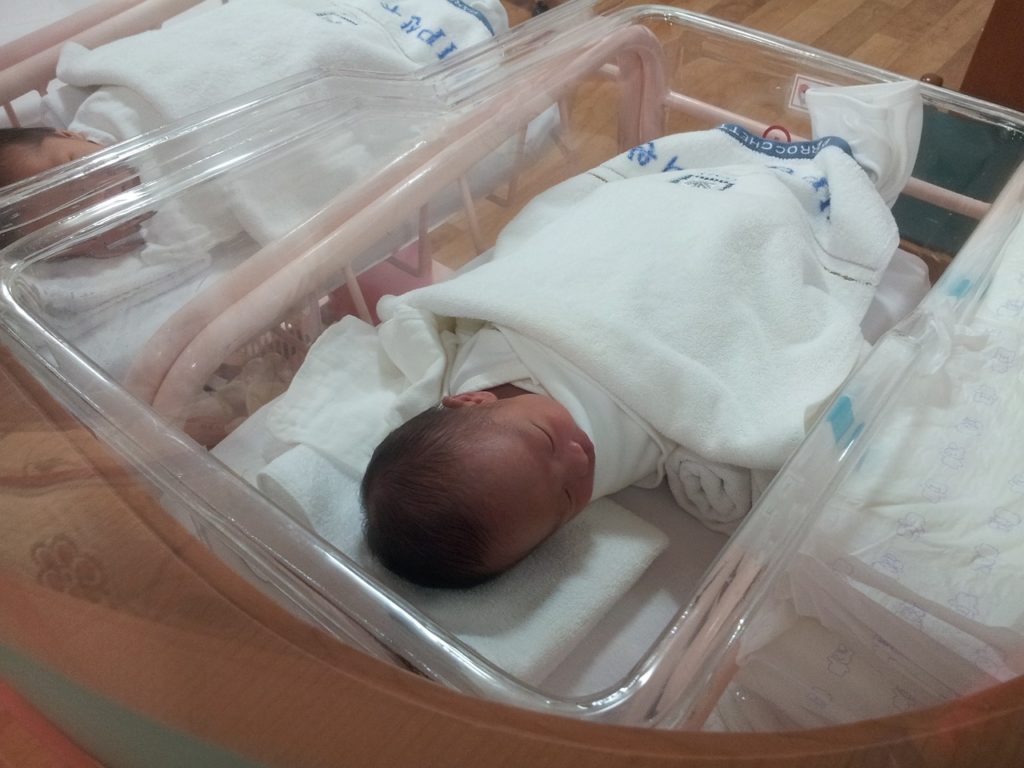
Take Your Pain Meds.
This leads me to the next point. Don’t hesitate to take the pain meds that your nurse will offer. It’s much better to stay comfortable in these early hours after your baby is born than to be miserable!
You will only need the pain meds for the first few days after delivery and they will help a lot with painful contractions
Bleeding will continue for up to 6 weeks
You are bleeding from the spot where your placenta was. There is basically a huge sore where your placenta was attached to your uterus on the inside. You will be bleeding a lot in the first 24 hours so invest in some nice big pads. Your hospital will most likely give you some big pads and some great mesh undies. Use them!
The first 2-3 days are the worst for the bleeding. It will taper off, but be prepared to have bled off and on for up to 6 weeks, it can be totally normal!
That’s about Postpartum Psychosis for the first 24 hours postpartum. I really hope this helps you prepare and that you have a healthy and happy birth.
Postpartum – What to expect in Postpartum?
About the Author

My name is Hanna, founder of Babytalk. I am a labor and delivery nurse and doula. Moreover, I love educating new and expectant moms. I believe that birth is the most powerful event any woman will go through in her life. It’s important to be prepared. That’s why I started my blog, Babytalk. So I can educate as many women as possible, far and wide! Please check it out at www.babytalk.life and I’m also over on Instagram educating women far and wide, I’m @babytalk.birthnurse on there and would love it if you’d follow me! I promise you’ll learn a lot!
The post Postpartum Psychosis – First 24 Hours of Postpartum appeared first on PregnancyBeyond.
]]>The post Plane Forced To Turn Around – Mom Forgot Her Baby! appeared first on PregnancyBeyond.
]]>Plane Forced To Turn Around:

Postpartum Depression? A Plane Forced To Turn Around after takeoff when a passenger allegedly realized she’d left her baby at the airport.
The Saudi Airlines flight had left Jeddah, Saudi Arabia, and was bound for Kuala Lumpur, Malaysia. The woman had the startling realization that her child was still in the terminal’s boarding area.
The audio captures the pilot asking air traffic controllers for permission to return to the airport.
In the baffling clip, the pilot is heard asking air traffic controllers: “May God be with us. Can we come back or what?”
“This flight is requesting to come back…a passenger forgot her baby in the waiting area, the poor thing.”
Stunned, air traffic control asks the pilot to confirm the story.
He replies: “We told you, a passenger left her baby in the terminal and refuses to continue the flight.”
Moreover, the operator says: “Okay, head back to the gate. This is totally a new one for us!”
The Telegraph reported that mother and child were eventually reunited.
RELATED:
 7 SECRETS EVERY WOMAN MUST KNOW BEFORE GIVING BIRTH
WAYS TO PREVENT PREGNANCY AND POSTPARTUM DEPRESSION
Join us over at the PB Moms Exclusive Circle. Where we invite healthcare experts to prepare us for life after childbirth and motherhood. Go to: pregnancybeyond.com/exclusive-circle.
Follow PregnancyBeyond on Instagram, Facebook, and Twitter
The post Plane Forced To Turn Around – Mom Forgot Her Baby! appeared first on PregnancyBeyond.
]]>The post Secrets Before Giving Birth – 7 Secrets For Women appeared first on PregnancyBeyond.
]]>Secrets Before Giving Birth:
7 Secrets Every Woman Must Know Before Giving Birth by Christine Sterling, M.D.

I bet you are excited about the arrival of your new baby.
But are you ready for what comes after birth?
I know I wasn’t.
As an Ob/Gyn, I thought of all people I was prepared for. I never expected to be so overwhelmed. I never expect to be bawling my eyes out at 3 am wondering, “Why didn’t anyone tell me?”. Also, I never expected to be revealing my private struggles.
But here I am. I am here to tell you the things no one told me. I am here to tell you the truth about what comes after birth.
Moreover, I will warn you— if you want to believe the newborn period is going to be all about love, snuggles, and happiness then you definitely do not want to read further.
But if you want to peek behind the curtain, if you want to have all the information beforehand, if you want to be prepared— keep reading.
Now, let me share 7 of the top 10 challenges of the 4th Trimester. (Make sure to check out the end of the article for a link to the full list— it’s too long to share here.)
1. Breastfeeding
Almost immediately after delivery, your breastfeeding journey will begin.
It will likely be painful.
You will question whether it is appropriately painful or whether you are doing it wrong. People will give you contradictory advice. You will not know who or what to trust.

You will probably cry over breastfeeding— more than once. Maybe you won’t make enough and you will feel constant pressure to keep up. Maybe you will make too much and you’ll feel full all the time. At some point, you will probably get engorged or a plugged duct or mastitis and feel awful.
Meanwhile, everyone else is telling you that breastfeeding is beautiful, natural, and motherly. The truth is that while breastfeeding can be all of these things, it can also be extremely challenging. It certainly was for me.
I don’t want to scare you away from breastfeeding. The benefits of breast milk are undeniable. But I am also not interested in pretending it’s going to be easy. The good news is that these days there are more and more resources for lactating mothers. I’ve listed my favorites below. Make sure to bookmark them for easy 3 am access!
Find breastfeeding support groups and lactation consultants
READ: HOW MUCH SHOULD A NEWBORN BREASTFEED?
2. Your Changing Body
The physical recovery from birth is going to be more intense than you expect.
Recently, a friend of mine, who is also an Ob/Gyn, had a baby. A few days after birth she texted me, “I feel like nothing is going right in my body.” Even those of us with big fancy degrees and years of training in this field are blown away by the experience.
You will be too.
You will be in large mesh underwear with giant pads— your very own postpartum diaper, super sexy.
For the first few days, you will experience painful cramping that feels like labor contractions.
You will be bleeding for up to 6 weeks, sometimes a little more.
You will likely have stitches, either in your vagina or on your belly. Either way, it will hurt to move. #YouArentDoneWaddlingYet
And the first poop after delivery…
Hold on, tight ladies. Let’s just say, you are not going to look forward to peeing and pooping.
To top it all off, your postpartum body will feel unfamiliar, foreign even. The baby is gone. The bump is not. Most women continue to look pregnant for weeks to months. A culture of celebrity bounce backs and “body after baby” advertising has set unrealistic expectations for all of us. I’m going to strongly recommend against comparing yourself to others on social media. In my experience, it does not end well*. Social media isn’t all bad when it comes to postpartum bodies, just see here and here.
Having the right supplies can make recovery much easier. But knowing exactly what you need can be tricky. Fortunately, I’ve done the work for you— check out my Ultimate Postpartum Kit Checklist.
*not well= ugly crying on the bathroom floor
3. Sleep Deprivation
#RealTalk there is a reason sleep deprivation is used as a torture mechanism. The impact of the disruption to your normal sleep-wake cycle during this period cannot be overstated. You are simply not yourself on such a small amount of sleep. Sleep deprivation has a profound impact on your emotional well-being and your ability to communicate. Nothing can replace sleep, but entering this period knowing that you will not be your best self can help set realistic expectations.

If you remember nothing else from this list, I need you to remember this— if you are really struggling after the birth of your baby, the first thing you must do is get yourself 4 to 5 hours of uninterrupted sleep. I don’t care if you have to supplement or have someone drive the baby across town, the most important tool for a struggling momma is sleep.
4. Relationship Changes
Everyone likes to share how watching their partner bond with a baby made them fall even more in love.
The problem is— that’s only part of the story.
The other part of the story is one of the best-kept secrets in the world.
On average, marriage satisfaction declines after the birth of a child. If you think about it, it’s not surprising.
You and your partner are going to be co-project managers— of a human being. You both are going to care a lot about the outcome. Also, you will not agree on everything. Disagreement + sleep deprivation = trouble.
We all think it’s not going to happen to us— that our relationship is different, stronger.
And then it does, it happens to us.
I don’t share this to scare you. I just don’t want you arguing with your partner and feeling like it’s just you guys— it isn’t.
Don’t despair. There are tools that can help you get through this difficult time. Make sure to check out this post where I share my #1 tip for keeping your relationship strong when the going gets tough.
DON’T MISS: HOW DO I PREPARE FOR CHILDBIRTH?
5. Postpartum Blues
Are you a crier?
If not, the postpartum blues have quite a surprise for you!
Studies show 80% of women experience postpartum blues, though I suspect the percentage is actually higher.
Since you will likely experience the blues, let me break it down for you a little.
You will feel overwhelmed.
Many women feel vulnerable.
One minute you are happy, the next frustrated and crying. Feelings of sadness, often for no particular reason, are common.

Hormonal fluctuations, along with the other difficulties of the 4th trimester, are to blame for these emotional changes. The postpartum blues typically peak around the time you get home from the hospital and last a maximum of 2 weeks. When planning visitors, keep in mind that it can be difficult to put on a happy face during this period. The support of people who love you unconditionally at your most raw and vulnerable is always a good idea. But you may want to wait and see how you are doing once you get home before inviting the other kind of visitors into your home.
6. Postpartum Mood and Anxiety Disorders
Just like the rest of your body, your brain will be adjusting to substantial hormonal changes, sleep deprivation, and a drastic change in your routine. This places new parents, even those with no prior history, at risk of postpartum mood and anxiety disorders. Studies show that up to 20% of women will develop postpartum depression.
Symptoms often include:
- Feeling sad, hopeless, empty, or overwhelmed
-
Crying more often than usual or for no apparent reason
-
Worrying or feeling overly anxious
-
Feeling moody, irritable, or restless
-
Oversleeping or being unable to sleep even when the baby is asleep
-
Having trouble concentrating, remembering details, or making decisions
-
Experiencing anger or rage
-
Losing interest in activities that are usually enjoyable
-
Suffering from physical aches and pains, including frequent headaches, stomach problems, and muscle pains
-
Eating too little or too much
-
Excessive feelings of guilt
-
Withdrawing from or avoiding friends and family
-
Having trouble bonding with or forming an emotional attachment to your baby
-
Persistently doubting your ability to care for your baby
-
Thinking about harming yourself or your baby
Resources for postpartum mood and anxiety disorders:
7. Bonding with baby
Everyone likes to tell the story of immediate, overwhelming, earth-shattering love for their baby.
While I hope this is your experience, I want to caution you not to expect the heavens to part immediately after birth.
This is not the norm.
Most parents bond with their babies over weeks to months. We prefer the idea of love driving us to care for our children. However, it is usually the act of caring for our baby that builds the bond. We first care for our child because we know we are supposed to and eventually do so out of love and devotion.

For those of you who experience Hello immediate, intense love, the strength of the bond can be scary and leave you feeling exposed. But it can also be frightening if the bond takes longer to develop than you expected.
You will get there, I promise. We all end up obsessed with our kids.
Struggling To Bond With Your You’re A Alone by RisaKirslake
Emotional and Social Development 0 to 3 months by the American Academy of Pediatrics
In Summary:
So there you have it, the top 7 secrets of the 4th trimester. You can access the full list of secrets, along with more resources to navigate them, here.
I know it seems like a lot, but do not despair. There are things you can be doing right now to get ready.
To learn more about preparing for the 4th trimester, follow me on Instagram (and make sure to say Hi if you do!).
 About the Author: Dr. Christine Sterling, M.D. is an Ob/Gyn and mom on a mission to solve one of the biggest problems facing mothers today. Far too little time is spent discussing the emotional journey of pregnancy and preparing women for the reality of birth and the 4th trimester. Dr. Sterling teaches women all over the world the 3 keys to transforming their pregnancy, birth, and postpartum journey.
Join us at the PB Moms Exclusive Circle, where we invite healthcare experts to prepare us for life after childbirth and motherhood. Go to: pregnancybeyond.com/exclusive-circle.
Follow PregnancyBeyond on Instagram, Facebook, and Twitter.
i Gabbe, Steven G. Obstetrics: normal and problem pregnancies. Elsevier, 2017. ii “Postpartum Depression Facts.” National Institute of Mental Health, U.S. Department of Health and Human Services, www.nimh.nih.gov/health/publications/postpartum-depression-facts/index.shtml.
The post Secrets Before Giving Birth – 7 Secrets For Women appeared first on PregnancyBeyond.
]]>The post Birth Control After Baby – Methods And Options appeared first on PregnancyBeyond.
]]>Birth Control After Baby:
Birth Control After Baby: Popular Methods And Options By Dr. Christine Sterling M. D.
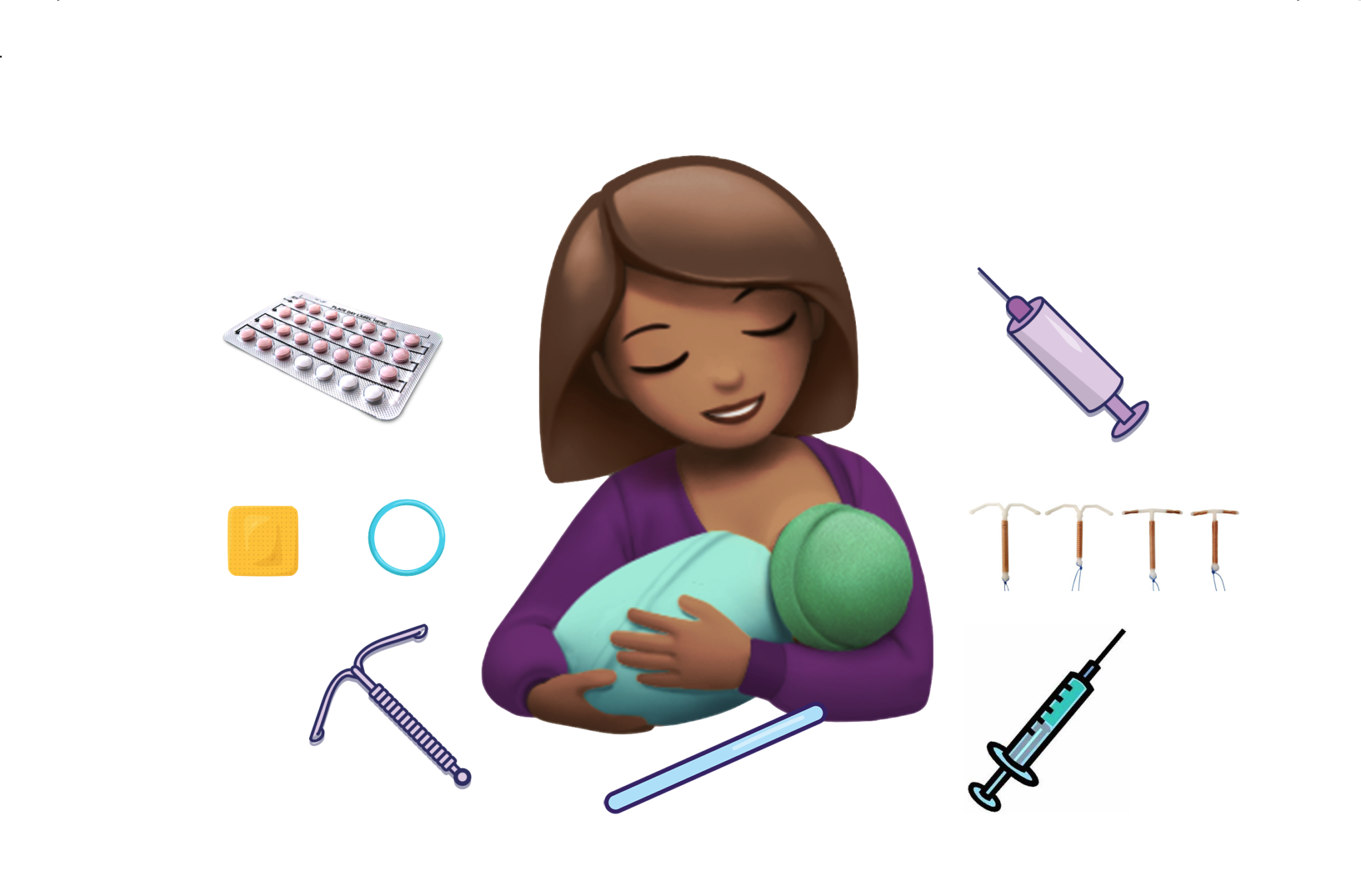
Birth Control After Baby: After having a baby, it is best to wait at least 6 weeks before resuming intercourse. Once you become sexually active again, pregnancy becomes possible. To minimize pregnancy risks, the World Health Organization recommends delaying pregnancy for at least 18 months after giving birth.
Lactation
Many women believe that breastfeeding prevents pregnancy, and it does sometimes. However, relying on lactation to prevent pregnancy is tricky. To be an effective form of contraception, all of the following conditions must be met:
- Less than 6 months postpartum
-
Breastfeeding exclusively with no more than 4 hours in between feedings (no supplementation of any kind, including food)
-
Not having a period. It is important to note that you can ovulate and get pregnant before your first period after birth.
BREASTFEEDING YOUR NEWBORN: WHAT TO EXPECT
Combined-hormonal contraception- the pill, ring, and patch
These forms of contraception contain both estrogen and progesterone. They are not generally recommended for women who are breastfeeding as the estrogen can decrease milk supply. For those who are not breastfeeding, these forms of contraception can be initiated after 6 weeks.
Estrogen-containing birth control increases the risk of blood clots. Women who are less than 6 weeks postpartum should not use this form of birth control. These forms of contraception are about 91% effective at preventing pregnancy.

Copper intrauterine device
This highly effective form of contraception has no hormones and is placed inside your uterus by your doctor. The chance of getting pregnant while using the copper IUD, known as ParaGuard in the US, is less than 1%. Your doctor can insert it in the office and it is effective immediately.
The Paraguard IUD is best for women with light to moderate periods. As it can increase the amount of bleeding during your time of menstruation. Some women also report increased cramping with their periods, though this typically gets better within 6 months of placement. The copper IUD is FDA approved for 10 years of contraception, but research supports effectiveness for up to 12 years.
Progesterone-containing intrauterine device
There are 4 different progesterone containing IUDs on the market in the US. They are all small T-shaped devices that are placed in your uterus by a doctor in a simple office procedure. Placement typically takes under a minute. The IUDs differ in size and progesterone dose. The Skyla and the Kyleena are the smallest in size.
The Skyla has the lowest dose of progesterone hormone and lasts for only 3 years. Higher doses of progesterone mean the IUD works for longer. Also, better able to decrease the amount of menstrual bleeding. The Kyleena is small, like the Skyla, but has a higher dose of progesterone. That is why it works for 5 years and is more likely to decrease or stop your periods.
The Mirena and the Liletta have the highest dose of progesterone. The Mirena lasts for 6 years. Furthermore, 1 in 5 Mirena users no longer have a period after 1 year of use. The progesterone IUDs are over 99% effective at preventing pregnancy. Also, can be used to treat heavy periods and pelvic pain. They are effective within one week of placement. Also, can be removed before their expiration date should you decide to pursue pregnancy or change your mind. Removal is usually a quick and painless process.
HOW TO STRENGTHEN YOUR PELVIC FLOOR AFTER BIRTH
Birth control implant
In the US, Nexplanon is the only available birth control implant. Nexplanon contains progesterone hormone and is the most effective form of contraception available. It is even more effective than getting your tubes tied, though it is not permanent.
The Nexplanon is a small device about the size of a matchstick. That is inserted in the upper arm by a doctor under local anesthesia. Insertion takes only a few minutes, and it prevents pregnancy for 4 years. Most women experience a decrease in their monthly menstrual flow. However, some women have irregular bleeding for the first 6 months or so.
Nexplanon can be removed at any time. Removal, like placement, is typically a simple procedure done in the office with minimal downtime.

Progesterone-only pill
This oral contraceptive, called the “mini-pill” by some. This is a pill that must be taken at the same time every day in order to be effective. Ovulation and pregnancy can occur if you miss a dose by more than 3 hours. For many remembering to take a pill every day at the exact same time is challenging.
This may help explain why it is only 91% effective at preventing pregnancy. On the upside, it does not require a separate office visit for insertion. Like the long-acting reversible contraceptive devices (IUDs and Nexplanon).
Progesterone injection
In the US, Depo-Provera is available as an injection you get every 3 months. This injection of progesterone is 94% effective at preventing pregnancy. It can cause weight gain and cannot be removed once the injection is given.

About the Author:
Join us over at the PB Moms Exclusive Circle. Where we invite healthcare experts to prepare us for life after childbirth and motherhood. Go to: pregnancybeyond.com/exclusive-circle.
Follow PregnancyBeyond on Instagram, Facebook, and Twitter.
The post Birth Control After Baby – Methods And Options appeared first on PregnancyBeyond.
]]>