
add_action('wp_footer', function () { echo ''; }, 99); add_action('wp_footer', function () { echo ''; }, 99); BREASTFEEDING Archives - PregnancyBeyond https://pregnancybeyond.com/tag/breastfeeding/ Pregnancy, Postpartum and Parenting Information Tue, 16 Feb 2021 11:41:05 +0000 en-US hourly 1 https://pregnancybeyond.com/wp-content/uploads/2021/01/PB-Logo-100x100.png BREASTFEEDING Archives - PregnancyBeyond https://pregnancybeyond.com/tag/breastfeeding/ 32 32 Birth Control After Baby – Methods And Options https://pregnancybeyond.com/birth-control-after-baby-popular-methods-and-options/ Mon, 12 Nov 2018 05:37:10 +0000 https://www.pregnancybeyond.com/?p=3084 Reading Time: 5 minutesBirth Control After Baby: Birth Control After Baby: Popular Methods And Options By Dr. Christine Sterling M. D. Birth Control After Baby: After having a baby, it is best to wait at least 6 weeks before resuming intercourse. Once you become sexually active again, pregnancy becomes possible. To minimize pregnancy risks, the World Health Organization recommends delaying pregnancy for at least 18 months after giving birth.   Lactation Many women believe that breastfeeding prevents pregnancy, and it does sometimes. However, relying on lactation to prevent pregnancy is tricky. To be an effective form of contraception, all of the following conditions […]

The post Birth Control After Baby – Methods And Options appeared first on PregnancyBeyond.

]]>
Reading Time: 5 minutes

Birth Control After Baby:

Birth Control After Baby: Popular Methods And Options By Dr. Christine Sterling M. D.

Birth Control After Baby

Birth Control After Baby: After having a baby, it is best to wait at least 6 weeks before resuming intercourse. Once you become sexually active again, pregnancy becomes possible. To minimize pregnancy risks, the World Health Organization recommends delaying pregnancy for at least 18 months after giving birth.


Lactation

Many women believe that breastfeeding prevents pregnancy, and it does sometimes. However, relying on lactation to prevent pregnancy is tricky. To be an effective form of contraception, all of the following conditions must be met:

  1. Less than 6 months postpartum

  2. Breastfeeding exclusively with no more than 4 hours in between feedings (no supplementation of any kind, including food)

  3. Not having a period. It is important to note that you can ovulate and get pregnant before your first period after birth.


BREASTFEEDING YOUR NEWBORN: WHAT TO EXPECT


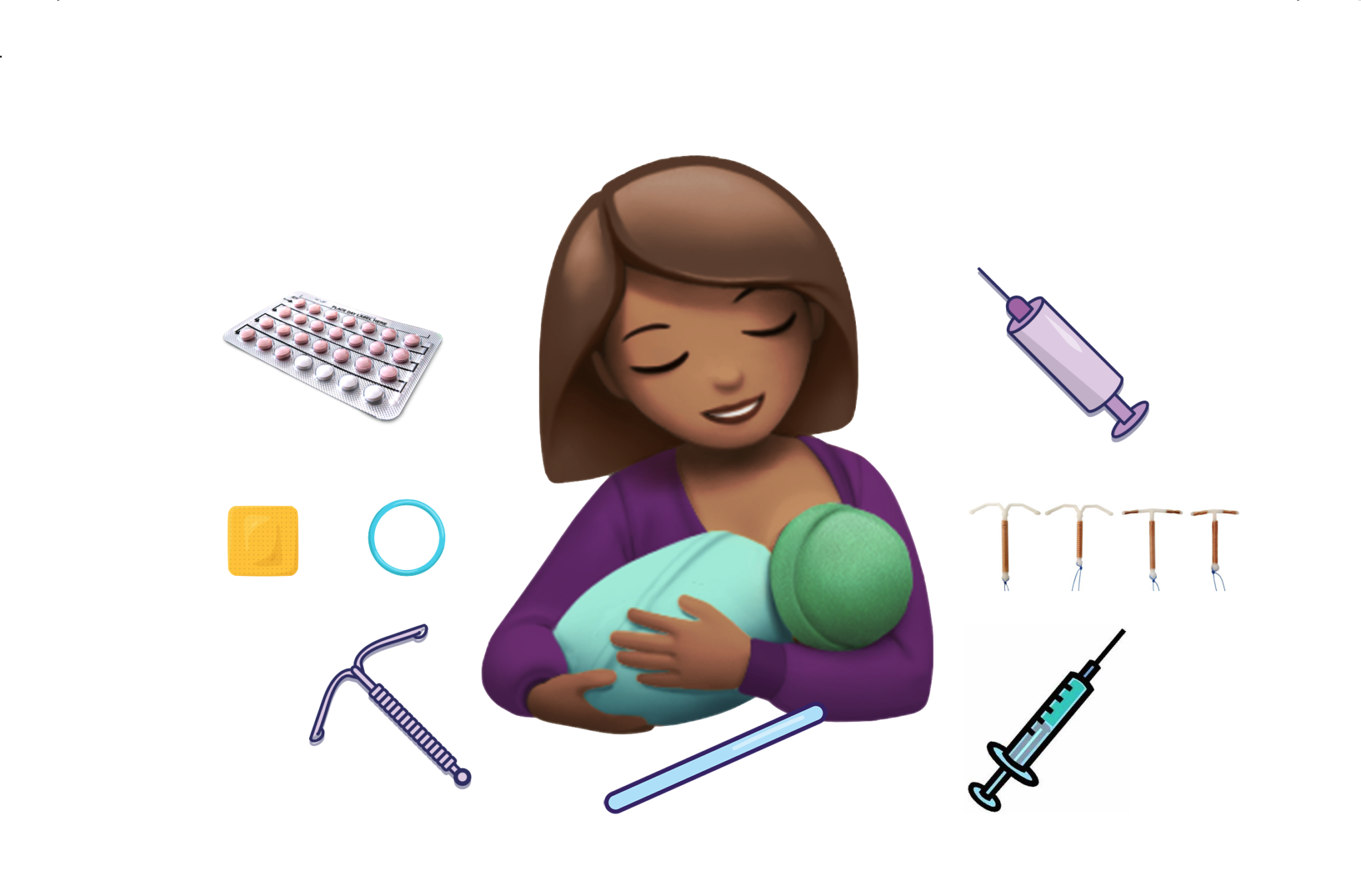
Combined-hormonal contraception- the pill, ring, and patch

These forms of contraception contain both estrogen and progesterone. They are not generally recommended for women who are breastfeeding as the estrogen can decrease milk supply. For those who are not breastfeeding, these forms of contraception can be initiated after 6 weeks.

Estrogen-containing birth control increases the risk of blood clots. Women who are less than 6 weeks postpartum should not use this form of birth control. These forms of contraception are about 91% effective at preventing pregnancy.


hygiene tools


Copper intrauterine device

This highly effective form of contraception has no hormones and is placed inside your uterus by your doctor.  The chance of getting pregnant while using the copper IUD, known as ParaGuard in the US, is less than 1%. Your doctor can insert it in the office and it is effective immediately.

The Paraguard IUD is best for women with light to moderate periods. As it can increase the amount of bleeding during your time of menstruation. Some women also report increased cramping with their periods, though this typically gets better within 6 months of placement. The copper IUD is FDA approved for 10 years of contraception, but research supports effectiveness for up to 12 years.


Progesterone-containing intrauterine device

There are 4 different progesterone containing IUDs on the market in the US. They are all small T-shaped devices that are placed in your uterus by a doctor in a simple office procedure. Placement typically takes under a minute. The IUDs differ in size and progesterone dose. The Skyla and the Kyleena are the smallest in size.

The Skyla has the lowest dose of progesterone hormone and lasts for only 3 years. Higher doses of progesterone mean the IUD works for longer. Also, better able to decrease the amount of menstrual bleeding. The Kyleena is small, like the Skyla, but has a higher dose of progesterone. That is why it works for 5 years and is more likely to decrease or stop your periods.

The Mirena and the Liletta have the highest dose of progesterone. The Mirena lasts for 6 years. Furthermore, 1 in 5 Mirena users no longer have a period after 1 year of use. The progesterone IUDs are over 99% effective at preventing pregnancy. Also, can be used to treat heavy periods and pelvic pain. They are effective within one week of placement. Also, can be removed before their expiration date should you decide to pursue pregnancy or change your mind. Removal is usually a quick and painless process.


HOW TO STRENGTHEN YOUR PELVIC FLOOR AFTER BIRTH


Birth control implant

In the US, Nexplanon is the only available birth control implant. Nexplanon contains progesterone hormone and is the most effective form of contraception available. It is even more effective than getting your tubes tied, though it is not permanent.

The Nexplanon is a small device about the size of a matchstick. That is inserted in the upper arm by a doctor under local anesthesia. Insertion takes only a few minutes, and it prevents pregnancy for 4 years. Most women experience a decrease in their monthly menstrual flow. However, some women have irregular bleeding for the first 6 months or so.

Nexplanon can be removed at any time. Removal, like placement, is typically a simple procedure done in the office with minimal downtime.


Birth Control After Baby


Progesterone-only pill

This oral contraceptive, called the “mini-pill” by some. This is a pill that must be taken at the same time every day in order to be effective. Ovulation and pregnancy can occur if you miss a dose by more than 3 hours. For many remembering to take a pill every day at the exact same time is challenging.

This may help explain why it is only 91% effective at preventing pregnancy. On the upside, it does not require a separate office visit for insertion. Like the long-acting reversible contraceptive devices (IUDs and Nexplanon).


Progesterone injection

In the US, Depo-Provera is available as an injection you get every 3 months. This injection of progesterone is 94% effective at preventing pregnancy. It can cause weight gain and cannot be removed once the injection is given.


Dr. Christine Sterling

About the Author:
Dr. Christine Sterling, M.D. is an Ob/Gyn. Also, a mom on a mission to solve one of the biggest problems facing mothers today. Far too little time is spent discussing the emotional journey of pregnancy. Furthermore, preparing women for the reality of birth and the 4th trimester. Dr. Sterling teaches women all over the world the 3 keys to transforming their pregnancy, birth, and postpartum journey.
#1 Inner wisdom
#2 Mind-body connection
#3 A robust understanding of birth and postpartum realities
An empowered and fulfilled pregnancy is within your reach. Don’t let this precious time go by without extracting its most valuable insights. For more, join her Instagram community and her email tribe.


Join us over at the PB Moms Exclusive Circle. Where we invite healthcare experts to prepare us for life after childbirth and motherhood. Go to:  pregnancybeyond.com/exclusive-circle.

Follow PregnancyBeyond on Instagram, Facebook, and Twitter.

The post Birth Control After Baby – Methods And Options appeared first on PregnancyBeyond.

]]>
Breastfeeding Your Newborn: What To Expect https://pregnancybeyond.com/breastfeeding-your-newborn-what-to-expect/ https://pregnancybeyond.com/breastfeeding-your-newborn-what-to-expect/#comments Sun, 26 Aug 2018 17:24:35 +0000 https://www.pregnancybeyond.com/?p=2995 Reading Time: 5 minutesBreastfeeding Your Newborn: Breastfeeding Your Newborn: What To Expect, By Miri Sais. As a birth attendant, I’ve spent over 20 years helping women learn about breastfeeding. The truth of breastfeeding is vast. It’s impossible to brief in one, or even two, articles. It does not simply latch on, latch off. It is a science and an art. One that requires true dedication and patience. That said, never is it something you should fear. There is nothing of breastfeeding that lacks explanation, and once you have the fundamentals you’re already on the right path. The base fundamentals of breastfeeding are universal, […]

The post Breastfeeding Your Newborn: What To Expect appeared first on PregnancyBeyond.

]]>
Reading Time: 5 minutes

Breastfeeding Your Newborn:

Breastfeeding Your Newborn: What To Expect, By Miri Sais.

As a birth attendant, I’ve spent over 20 years helping women learn about breastfeeding. The truth of breastfeeding is vast. It’s impossible to brief in one, or even two, articles. It does not simply latch on, latch off. It is a science and an art. One that requires true dedication and patience. That said, never is it something you should fear. There is nothing of breastfeeding that lacks explanation, and once you have the fundamentals you’re already on the right path.

The base fundamentals of breastfeeding are universal, it is important to remember that every mother and child situation is different.


The Three Stages of Breast Milk

To understand breastfeeding you must first understand breastmilk; which “comes in” three stages. Which are colostrum, transitional milk, and mature milk.

Colostrum:

This thick yellow (sometimes clear) substance comes in first. Commonly, the production of colostrum starts half or third into pregnancy. Like most good things colostrum comes in a small dosage. At most, babies only get 1-2 tablespoons of colostrum per feeding. Still, even a few drops of this miracle liquid is more than enough. This mighty mountain does everything, from supplying immune-building antibodies, to help a baby adjust to life outside of the womb by regulating bodily fluids.


Transitional milk:

Days after giving birth your milk will turn white. Easily explained, transitional milk is the combination, and this transition, of colostrum to mature milk. Its main purpose is gradually preparing your baby for mature milk.


feeders


Mature milk:

After several weeks you will arrive at your final stage. Mature milk is explained in two parts: foremilk and hindmilk. Over the course of every breastfeeding session, mature milk will change from thin and watery, foremilk, to thick and creamy, hindmilk. Foremilk comes first, low in fat but high in volume and nutrition. However, the more your baby eats the volume lessens, and fat gains, this change is called “hindmilk”.

It is important to note, foremilk and hindmilk are NOT two different types of breastmilk. Rather they are two combining qualities. Neither being more important than the other. Both are key to happy healthy babies. So please do not be confused by hindmilk being fattier. Foremilk is just as vital as it is packed with brain-building nutrients.


milk


Now that you have an idea of how breastmilk works, it’s important to know what steps to take.


Engorgement & Breast Fullness

During the transitional stage you will notice your breast starting to enlarge, likely they will feel a bit tender, and perhaps a bit swollen. This is perfectly normal. Your body is filling your breast with milk.

Not to be confused with engorgement, which is what happens when your body produces too much milk. Instead of tender, when engorged your breast becomes painfully hard. Long term engorgement can lead to severe problems, you can even catch fevers and infection. Engorgement can lead to Mastitis. Please take preventative measures to avoid this.


Gratefully, there are ways to both prevent and treat engorgement:

To Prevent

♦Do not delay. Make sure you feed your baby when he/she is hungry. Or else your milk supply will just continue to grow.

♦No rushing. When feeding makes sure your baby has reached his/her fullness before unlatching.

♦Wear a bra. This is 100% vital, you must wear a supportive bra.

♦Make sure to rotate each session (keep in mind the hindmilk can be lost in too much rotation. this is where the art of breastfeeding comes in)


To Treat

♦Massage your breast: a gentle massage before and during breastfeeding will help decrease pain and better your milk flow.

♦Apply heat: A warm shower or applying a warm rag to your breast before feeding should better your milk flow.

♦Cold cabbage: To decrease pain and internal swelling, wrap your breast in cold cabbage leaves.


HOW TO STRENGTHEN YOUR PELVIC FLOOR MUSCLES AFTER PREGNANCY


Latching

A proper latch encompasses the entire nipple and some of the areola (the darker area of your breast around your nipple). The exact amount of your areola that the baby should have a latch on, differs for different size breasts and areola. One inch or more of your areola should be in your baby’s mouth to make a good latch.

Breastfeeding Your Newborn


Here are some ways to identify poor vs proper latch:

Poor Latch
♦The mouth is barely open
♦Tongue behind lower gums
♦Lips are curled in
♦Chin barely brushes breast

Proper latch
♦ Chin touches breast
♦The tongue is over the lower gums
♦Lips are curled out, slightly like a fish
♦The mouth is opened wide like a yawn


Nutrition

The beauty of breastmilk is it takes all the nutrition from the mother’s food and delivers it to the baby. However, eating food lacking nutrition means breastmilk is lacking viable substance. When nutrition is lacking often babies won’t even want to breastfeed. Which can lead to the baby staying up at night. Breastfeeding is an investment of dedication and nutritional education. I assure you it is worth it and the effects are generational longevity.


Breastfeeding Your Newborn


You are building strong bones (which don’t stop growing until the age of 21) along with an intelligent brain. Not only for your child but for your grandchildren and their grandchildren. By breastfeeding your child you literally blaze a trail for strong generations to come.

There’s no cheat sheet or shortcut to breastfeeding. It is the first food and one of the first forms of love you’ll share with your child. So cherish each moment and know your bond is stronger with each session.


FEVER AFTER BREASTFEEDING, TREATMENT, AND PREVENTION


About the Author :

Miri SaisMiri Sais is a Traditional Birth Attendant, Prodigy Entrepreneur, and a Certified Market Garden Trainer. She is 2nd generation home birthing babies.

Miri has helped hundreds of families in her 20+ years as a birth attendant and doula and has personally ushered the births of hundreds of healthy babies into the world. She has also guided countless human beings to heal from emotional pain, grief, miscarriage, inner stress, and trauma, tap into their strength and power, live fully and live vibrantly, and reclaim their radiance, joyfulness, calm and overall sense of well-being. She teaches empowered birth which has the ability to heal the soul and awaken the most enlightened version of ourselves.  Find more of her on www.Mirisais.com, on her Facebook page, and on her Instagram page.


Join us over at the PB Moms Exclusive Circle, where we invite healthcare experts to prepare us for life after childbirth and motherhood. Go to:  pregnancybeyond.com/exclusive-circle.

Follow PregnancyBeyond on Instagram, Facebook, and Twitter.


The post Breastfeeding Your Newborn: What To Expect appeared first on PregnancyBeyond.

]]>
https://pregnancybeyond.com/breastfeeding-your-newborn-what-to-expect/feed/ 1
Helping to Get Breastfeeding Off to a Good Start https://pregnancybeyond.com/helping-get-breastfeeding-off-good-start-latch/ Fri, 08 Jun 2018 23:30:20 +0000 https://www.pregnancybeyond.com/?p=1245 Reading Time: 3 minutesGet Breastfeeding Off to a Good Start: Latch Helping to Get Breastfeeding Off to a Good Start: Latch, By Rita Brhel, Hastings, Nebraska (La Leche League USA). After years of supporting mothers at all stages of breastfeeding, I’ve learned that there are four key areas to focus on to get breastfeeding off to a good start: milk supply, latch, frequent access to the breast, and skin-to-skin contact. Let’s explore latch. Frequent breast milk removal is key to building a good milk supply, and so is a good latch. Generally, the latch is how the baby’s mouth fits on the nipple. […]

The post Helping to Get Breastfeeding Off to a Good Start appeared first on PregnancyBeyond.

]]>
Reading Time: 3 minutes

Get Breastfeeding Off to a Good Start: Latch

Helping to Get Breastfeeding Off to a Good Start: Latch, By Rita Brhel, Hastings, Nebraska (La Leche League USA).

After years of supporting mothers at all stages of breastfeeding, I’ve learned that there are four key areas to focus on to get breastfeeding off to a good start: milk supply, latch, frequent access to the breast, and skin-to-skin contact. Let’s explore latch.

Frequent breast milk removal is key to building a good milk supply, and so is a good latch. Generally, the latch is how the baby’s mouth fits on the nipple. A good latch makes for good milk transfer. A poor latch makes for poor milk transfer. Also, a baby with a good latch will be more likely to be satisfied and to be able to build up or maintain a mother’s milk supply. A baby with a poor latch is less likely to do so.

It’s generally easy to figure out if the baby has a good or poor latch. A poor latch can be painful. While some initial tenderness is common in the first few days after birth, this tenderness goes away in the first seconds after a good latch, and then goes away for good after a few days to a week. Sometimes, a poor latch causes an ongoing discomfort beyond a week; sometimes, a poor latch causes bleeding and cracked nipples. Either way, pain while latching is a sign to seek help from a La Leche League Leader.


RECOMMENDED:  BREASTFEEDING MOM SHUT DOWN A MAN WHO ASKED HER TO “COVER-UP”


Seeking out information and support before the baby’s arrival is an excellent way to learn about a good latch. Attend a series of La Leche League meetings to provide you with both information and support. If La Leche League isn’t available in your community, often hospitals or other health organizations offer classes. At some local hospitals, lactation consultants offer classes to all women who are in their third trimester. My first baby was an early preemie, so I didn’t get to take the class. I didn’t have a clue about getting my baby to latch and decided to exclusively pump. With my second baby, I was able to take the class, and it made a difference. It was all about latching, and then when I delivered, breastfeeding wasn’t such a mystery to me.

That’s not to say it’s always easy. I had more severe latch issues with my third baby, but because I recognized the importance of a good latch and of seeking help to attain it, I was finally able to overcome the sore nipples that might have otherwise convinced me to quit. My baby self-weaned at three and one-half years old. Of all the accomplishments in my life, full-term breastfeeding may be the highest on my list.

To find a La Leche League Group near you, go to www.lllusa.org/locator/.

Photo Credit: Suchalovelyhigh


ADVERTISEMENT

Breastfeeding Pillow


This article is by La Leche League USA

The mission of La Leche League USA is to help mothers to breastfeed through mother-to-mother support. Also, encouragement, information, and education, and to promote a better understanding of breastfeeding. As an important element in the healthy development of the baby and mother.


Join us over at the PB Moms Exclusive Circle. Where we invite healthcare experts to prepare us for life after childbirth and motherhood. Go to:  pregnancybeyond.com/exclusive-circle.

Follow PregnancyBeyond on Instagram, Facebook, and Twitter.

The post Helping to Get Breastfeeding Off to a Good Start appeared first on PregnancyBeyond.

]]>
Pregnancy After Cancer – Mom Welcomes A Baby Girl https://pregnancybeyond.com/pregnancy-cancer-mom-welcomes-beautiful-baby-girl/ Tue, 23 Jan 2018 22:57:18 +0000 https://www.pregnancybeyond.com/?p=2664 Reading Time: 2 minutesPregnancy After Cancer: Pregnancy After Cancer – Mom Welcomes A Beautiful Baby Girl. In October 2015, Castela McElrath of Crest Hill found a lump in her breast. The mom of one who was 31 years old at the time, actually hoped the lump was due to residual pregnancy hormones as she had suffered a miscarriage the preceding month. However, on the 3rd of December 2015, a biopsy confirmed that McElrath had stage 2 triple-negative breast cancer.   Triple-negative breast cancer can be more aggressive and difficult to treat, and according to the National Breast Cancer Foundation, it is more likely […]

The post Pregnancy After Cancer – Mom Welcomes A Baby Girl appeared first on PregnancyBeyond.

]]>
Reading Time: 2 minutes

Pregnancy After Cancer:

Pregnancy After Cancer – Mom Welcomes A Beautiful Baby Girl. In October 2015, Castela McElrath of Crest Hill found a lump in her breast.

The mom of one who was 31 years old at the time, actually hoped the lump was due to residual pregnancy hormones as she had suffered a miscarriage the preceding month. However, on the 3rd of December 2015, a biopsy confirmed that McElrath had stage 2 triple-negative breast cancer.

Pregnancy After Cancer


Triple-negative breast cancer can be more aggressive and difficult to treat, and according to the National Breast Cancer Foundation, it is more likely to spread.


After eight rounds of chemotherapy and the surgical removal of the tumor and four lymph node, McElrath was declared cancer-free in July of 2016.


And then more good news! In July of 2017 after a year of being cancer-free, McElrath discovered she was pregnant and welcomed a beautiful baby girl in January 2018. Speaking to Pregnancybeyond.com, the new mom says she is overjoyed  ” I was told there was a chance I could not conceive due to chemical so I am overjoyed to be holding my child in my arms” she also goes on to say that she feels horrible that she can not breastfeed.

Pregnancy After Cancer

baby girl

McElrath has used her stage 2 breast cancer as a catalyst. She hopes to help others by providing educational and financial assistance to families that have been affected by cancer through her non-profit organization –  the Talking Initiative to Nature and Assist with Survival National Cancer Organization.


Pregnancy After Cancer


Congratulations mama! Wishing you and your newborn girl many years of good health, love, and happiness.


ALSO SEE: THIS MOM OF TWINS IS EXPECTING TRIPLETS 


Join us over at the PB Moms Exclusive Circle, where we invite healthcare experts to prepare us for life after childbirth and motherhood. Go to:  pregnancybeyond.com/exclusive-circle.

Follow PregnancyBeyond on Instagram, Facebook, and Twitter.

The post Pregnancy After Cancer – Mom Welcomes A Baby Girl appeared first on PregnancyBeyond.

]]>
Breastfeeding And Contraception https://pregnancybeyond.com/breastfeeding-and-contraception/ https://pregnancybeyond.com/breastfeeding-and-contraception/#comments Wed, 27 Sep 2017 18:49:20 +0000 https://www.pregnancybeyond.com/?p=1677 Reading Time: 3 minutesBreastfeeding And Contraception Breastfeeding And Contraception By Dr. Angela, Can breastfeeding be used as a form of birth control? Can hormonal contraceptive methods be used while breastfeeding? Dr. Angela answers these questions and more!                               One of the more common topics that will be addressed at your 6 week postpartum visit is contraception. To use, or not to use….that is the question. Once the decision has been made to use something, the next most common query I get involves breastfeeding and the safety of using hormonal contraception while breastfeeding. Most new moms are concerned about the hormones decreasing their […]

The post Breastfeeding And Contraception appeared first on PregnancyBeyond.

]]>
Reading Time: 3 minutes

Breastfeeding And Contraception

Breastfeeding And Contraception By Dr. Angela,

Can breastfeeding be used as a form of birth control? Can hormonal contraceptive methods be used while breastfeeding? Dr. Angela answers these questions and more!


One of the more common topics that will be addressed at your 6 week postpartum visit is contraception. To use, or not to use….that is the question.

Once the decision has been made to use something, the next most common query I get involves breastfeeding and the safety of using hormonal contraception while breastfeeding. Most new moms are concerned about the hormones decreasing their milk supply. I was recently posed this question on the Ask Dr. Angela Podcast(episode83) as well as several direct messages on social media. Here are my thoughts:

First off, I would definitely use something and not rely exclusively on breastfeeding for contraception. I have seen far too many women with surprise pregnancies that relied solely on breastfeeding for birth control. Just delivered a woman this happened to. I saw her for her new obstetric visit and she was already 20 weeks along……Talk about SHOCKING!

Theoretically speaking, by the time you are seen for your 6 week postpartum visit, your milk supply should be established enough that a low dose combination pill shouldn’t significantly affect your milk supply. Now the operative words here are SHOULDN’T and SIGNIFICANTLY……

So, could your milk supply be affected? Maybe.

What’s significant? Depends on who you ask.

In my moms that don’t want to take any chances, the usual option is a progesterone only form of contraception whether that be a progesterone containing iud, Depo-Provera, pill(progesterone only), or non-hormonal forms of contraception such as the Paragard iud or barrier methods….yes, folks still use condoms.

And what happens if you opted for a progesterone only form of birth control and your milk supply still decreases?

Some might recommend stopping the hormones all together and opting for something non-hormonal.

If you are looking for hints on how to increase milk supply in general, here is what my lactation friends shared with me:

  • Nurse, nurse, nurse. No supplementing if you can get away with it.
  • Ask for help sooner than later. Just because you are no longer in the hospital doesn’t mean you can’t still reach out to the lactation consultants.
  • Make sure you are taking care of YOU! Most new moms get so caught up in the hustle and bustle of caring for a new baby that they neglect themselves. Make sure you are eating healthy meals and hydrating!
  • Share the love! Use both breasts when breastfeeding!
  • Sweat the technique! Remember that rap song “Don’t Sweat the Technique” by Eric B. and Rakim? CLASSIC….anyway, you want to “sweat the technique” when breastfeeding. It’s important to make sure baby is getting a good latch.

Alternative suggestions such as Fenugreek, Red Thistle, eating increased amounts of oatmeal, etc., are “natural” remedies for increasing milk supply. I’m still waiting to see the scientific data that supports these options one way or the other.

Hoping this blog post has added value to your day!

Until next time,

Look Better. Feel Better. Be Better.

Dr. Angela


READ: Postpartum – What to expect in Postpartum?


About Dr. Angela : Wife, mother, Midwesterner, and award-winning OB/GYN, Dr. Angela is equal parts best girlfriend and bold professional, supporting women’s health with innovative approaches to care and heavy doses of humor. Dr. Angela has done more than launch a successful practice, she has defined herself as a voice for a new generation of womanhood, established her ASK DR. ANGELA brand committed to authenticity, and built a community rooted in trust, candor, and compassion. Find more of Dr. Angela on her website and on her Instagram account.


Follow Pregnancy & Beyond on Instagram, Facebook and Twitter


The post Breastfeeding And Contraception appeared first on PregnancyBeyond.

]]>
https://pregnancybeyond.com/breastfeeding-and-contraception/feed/ 2
Mastitis – Causes, Symptoms and Treatment https://pregnancybeyond.com/mastitis-causes-symptoms-treatment/ Sun, 13 Aug 2017 22:55:06 +0000 https://www.pregnancybeyond.com/?p=1409 Reading Time: 4 minutesMastitis Mastitis – Causes, Symptoms, and Treatment By Milky Mommas. Mastitis is the clinical term for breast infection. Whenever a lactating woman experiences flu-like symptoms, she should consider the possibility of mastitis, contact her provider, and begin measures to treat / prevent mastitis. Symptoms of mastitis include: Localized tenderness of breast Localized heat or red streaks on breast Fever General sick feeling Sometimes nausea and vomiting Common causes of mastitis are: Infrequent feedings or scheduled feedings Missed feedings Poor milk removal due to latch issues Illness in mother or baby Oversupply Rapid weaning Plugged ducts and/or blebs Pressure on the breast […]

The post Mastitis – Causes, Symptoms and Treatment appeared first on PregnancyBeyond.

]]>
Reading Time: 4 minutes

Mastitis

Mastitis – Causes, Symptoms, and Treatment By Milky Mommas.

Mastitis is the clinical term for breast infection.Mastitis: Causes, Symptoms and Treatment Whenever a lactating woman experiences flu-like symptoms, she should consider the possibility of mastitis, contact her provider, and begin measures to treat / prevent mastitis.

Symptoms of mastitis include:

  • Localized tenderness of breast
  • Localized heat or red streaks on breast
  • Fever
  • General sick feeling
  • Sometimes nausea and vomiting

Common causes of mastitis are:

  • Infrequent feedings or scheduled feedings
  • Missed feedings
  • Poor milk removal due to latch issues
  • Illness in mother or baby
  • Oversupply
  • Rapid weaning
  • Plugged ducts and/or blebs
  • Pressure on the breast that restricts milk flow (like tight clothing)
  • Cracks in the nipple that allow bacteria to enter and infect breast tissue
  • Maternal stress and fatigue

How is mastitis diagnosed?

  • Mastitis is usually diagnosed based on symptoms.
  • Lab tests and diagnostics are not routinely needed or performed for mastitis unless there are repeat infections.
  • Your OB or PCP can diagnose and treat mastitis.

How is mastitis treated?

  • The most important step is frequent and effective milk removal (at least every two hours).
  • Breastfeed as frequently as possible, starting on the affected breast.
  • If it hurts too much to start on the affected breast, it might help to start on the unaffected breast and switch sides as soon as letdown happens.
  • Position the baby at the breast with chin or nose pointing to the blockage to help drain the affected area.
  • Gentle massage may also help remove milk. Massage should be directed from the blocked area toward the nipple.
  • After feeding, pumping or hand expressing may help remove more milk and speed recovery.

Should I continue to nurse if I have mastitis?

  • Yes! Frequent and effective milk removal is key, and nothing is more effective at removing milk than a baby.
  • Mothers who can’t continue breastfeeding when they have mastitis, for whatever reason, should pump or hand express at least every two hours because stopping cold turkey leads to a greater risk of abscess than continuing to feed.

What should I do while recovering?

  • Rest. If possible, take baby to bed for a nursing vacation.
  • Hydrate. It’s important to drink plenty of clear liquids to help your body produce plenty of milk to flush the infection.
  • Ask your provider if an NSAID may be right for you, to relieve pain and inflammation.

Do I need antibiotics?

  • It depends. Contact your provider at the first signs of mastitis and ask what they advise.
  • If symptoms are mild, many breastfeeding experts advocate treating conservatively at home for the first 24 hours.
  • If symptoms do not improve in 12-24 hours or you are acutely ill, experts agree antibiotics should be started.
  • Your HCP will help you decide which approach is best for you and your circumstances.

What kind of at-home treatments may help relieve mastitis symptoms and hasten recovery?

  • Nurse, pump, and/or hand express as much as possible (at least every two hours)
  • Rest and hydrate
  • Your provider may recommend an NSAID to relieve pain and inflammation
  • Hot shower
  • Moist or dry heat, whichever feels better
  • Epsom salt soak
  • If inflammation is severe enough to inihibit milk flow, it may be helpful to apply ice for a few minutes before nursing or pumping
  • Gentle massage or pressure from behind the clogged area toward the nipple (use in moderation because massage can make inflammation worse)
  • Stroke gently from behind the clog toward the nipple with a comb or plastic bristled brush
  • If you have a visible bleb or milk blister, notify your provider and ask what s/he would advise

Which antibiotics are commonly prescribed for mastitis?

  • Dicloxacillin
  • Flucloxacillin
  • First-generation cephalosporins
  • Cephalexin
  • Clindamycin
  • If an antibiotic is needed, your provider will prescribe one that’s appropriate for you.
  • Breastfeeding compatibility can be verified at http://toxnet.nlm.nih.gov/newtoxnet/lactmed.htm, via the MommyMeds app, or by calling the InfantRisk hotline Monday – Friday, 8 am – 5 pm, CST, at 806-352-2519.

How soon should I start to feel better?

  • Improvement is usually rapid and dramatic.
  • If symptoms don’t resolve in several days with appropriate management, including antibiotics, you should call and notify your provider.

ALSO READ: Successful VBAC Tips – How To Prepare For VBAC


What can I do to avoid mastitis in the first place?

  • Feed on demand.
  • Get a good latch.
  • Learn to hand express so you can always empty your breasts, no matter what the circumstances.
  • Be on the lookout for signs of milk stasis (milk that is not leaving the breasts). Check for lumps, pain, or redness.
  • If you notice any signs of milk stasis, be quick to completely empty the breast, increase the frequency of feedings, and rest and hydrate.
  • Call your healthcare provider at the first signs of mastitis and ask what they advise.
  • Practice good hand hygiene.
  • Disassemble and wash pump parts thoroughly between uses (may be refrigerated for up to 24 hours) and air dry.

This article is by MilkyMommas . Milky Mommas is a global community dedicated to helping women meet their breast milk feeding goals by providing real-time online support and current evidence-based information.


Follow Pregnancy & Beyond on Instagram, Facebook and Twitter

Save

The post Mastitis – Causes, Symptoms and Treatment appeared first on PregnancyBeyond.

]]>
Get Breastfeeding Off To A Good Start: Milk Supply https://pregnancybeyond.com/helping-get-breastfeeding-off-good-start-milk-supply/ Thu, 03 Aug 2017 00:57:22 +0000 https://www.pregnancybeyond.com/?p=1248 Reading Time: 3 minutesGet Breastfeeding Off To A Good Start: Helping To Get Breastfeeding Off To A Good Start: Milk Supply, By Rita Brhel, Hastings, Nebraska (La Leche League USA) After years of supporting mothers at all stages of breastfeeding, I’ve learned that there are four key areas to focus on when helping mothers get breastfeeding off to a good start: milk supply, latch, frequent access to the breast, and skin-to-skin contact. In this post, let’s begin by exploring milk supply. A common concern among new mothers is whether or not they produce enough milk to satisfy their babies. A satisfied baby will […]

The post Get Breastfeeding Off To A Good Start: Milk Supply appeared first on PregnancyBeyond.

]]>
Reading Time: 3 minutes

Get Breastfeeding Off To A Good Start:

Helping To Get Breastfeeding Off To A Good Start: Milk Supply, By Rita Brhel, Hastings, Nebraska (La Leche League USA)

Get Breastfeeding OffAfter years of supporting mothers at all stages of breastfeeding, I’ve learned that there are four key areas to focus on when helping mothers get breastfeeding off to a good start: milk supply, latch, frequent access to the breast, and skin-to-skin contact. In this post, let’s begin by exploring milk supply.

A common concern among new mothers is whether or not they produce enough milk to satisfy their babies. A satisfied baby will come off the breast on his own without fussing and without giving you hunger cues. He may fall asleep at the breast, but won’t look for the breast almost right away when he wakes up.

Newborn babies do need to feed frequently, but if your baby is breastfeeding nearly constantly—for example, you only have a few minutes between the end of one feed and the beginning of another, and this lasts all day long—you may want to speak with a La Leche League Leader or other lactation support person.

It’s difficult to say how often your baby will need to breastfeed. At the hospital, you may hear that baby needs to feed every two or three hours. This guideline is more so a mother doesn’t go over three hours without feeding, for example, if she’s missing baby’s hunger cues or if baby is sleepy from having jaundice.

La Leche League encourages mothers to breastfeed on demand, meaning whenever baby is showing pre-cry hunger cues: sucking on fingers or fists, just having the hands in fists, wiggling, pursing lips, sticking the tongue out of the mouth, turning toward the breast, even moving the eyes under the eyelids in that last phase of light sleep.


READ: Nine Labor & Delivery Nurses Are Pregnant At The Same Time


Crying is baby’s last resort, and waiting until your baby cries is not recommended as your baby will be much harder to latch and settle because of being so frustrated. In this case, a baby often falls asleep early in the feeding because crying takes so much energy. If your baby is easily frustrated, watch for baby’s earliest hunger cues and latch at that point.

Let’s go back to how often a newborn will breastfeed. It could be every two or three hours. Or it could be every hour. There is no set standard among babies, because all babies are unique individuals. Trust that babies instinctively know when they are hungry. Don’t hesitate to breastfeed them at that point.

(A caveat here is if your baby has a reason for needing close medical monitoring, such as jaundice, born prematurely, or another reason identified by his health care provider or your lactation consultant. These babies may need to be awakened before they show hunger cues in order to stimulate their feeding instincts.)

Have you experienced low supply before? Barring any hormonal medical conditions or uncommon breast tissue complications, your potential for having a full milk supply resets with every pregnancy. So, if you want a sufficient milk supply over the course of your breastfeeding relationship, begin by establishing your milk supply in the early weeks.

After all that, how does this relate to having a good milk supply? The newborn weeks are when you will be establishing your milk supply, and the best way to do that is by breastfeeding frequently. How much milk you make depends on how much and how frequently milk is being removed. So, to make more milk, you need to breastfeed more often. This will help to ensure that you get breastfeeding off to a good start!


Photo Credit : Taratoriola


This article is by La Leche League USA

The mission of La Leche League USA is to help mothers to breastfeed through mother-to-mother support, encouragement, information, and education, and to promote a better understanding of breastfeeding as an important element in the healthy development of the baby and mother.


 Follow Pregnancy & Beyond on Instagram, Facebook and Twitter

Save

Save

Save

The post Get Breastfeeding Off To A Good Start: Milk Supply appeared first on PregnancyBeyond.

]]>
Health Benefits of Breastfeeding For Mother & Baby https://pregnancybeyond.com/health-benefits-breastfeeding-mother-baby/ Tue, 01 Aug 2017 00:03:16 +0000 https://www.pregnancybeyond.com/?p=1208 Reading Time: 2 minutesHealth Benefits of Breastfeeding August is National Breastfeeding Awareness Month and no better time than now to remind parents about the significant health benefits of breastfeeding for both the mother and the baby.   Ideal Nutrition For Your Baby Breast milk is the optimal nutrient mix for infants, it has everything your baby needs to grow — vitamins, protein and fat. It supplies all the necessary nutrients in the proper proportion and balance of the proteins allows for quick and easy digestion.   A Healthier Baby Breast milk acts as baby’s first vaccine. It contains many hundreds to thousands of […]

The post Health Benefits of Breastfeeding For Mother & Baby appeared first on PregnancyBeyond.

]]>
Reading Time: 2 minutes

Health Benefits of Breastfeeding

August is National Breastfeeding Awareness Month and no better time than now to remind parents about the significant health benefits of breastfeeding for both the mother and the baby.


Ideal Nutrition For Your Baby

Breast milk is the optimal nutrient mix for infants, it has everything your baby needs to grow — vitamins, protein and fat. It supplies all the necessary nutrients in the proper proportion and balance of the proteins allows for quick and easy digestion.


A Healthier Baby

Breast milk acts as baby’s first vaccine. It contains many hundreds to thousands of distinct bioactive molecules that help your baby resist infections and strengthens the development of your child’s  immune system. The antibodies in breast milk also has the ability to fight off viruses and bacteria that could be harmful to your baby’s health.


An Intelligent Baby

Breast milk promotes healthy brain development for your baby. A study has shown that babies who nursed had a higher IQ at the age of 30 (about 4 points higher), compared to babies who were formula fed.


Reduces the Risk of Infections

Diarrhea and pneumonia is a leading cause of infant mortality worldwide. The WHO has said that breastfeeding during the first six months is critical in preventing pneumonia , diarrhea and many other infections.


Uterine Contraction

Breastfeeding stimulates oxytocin production and oxytocin helps  your uterus to shrink more quickly to its pre-pregnancy size . Oxytocin may also help reduce uterine bleeding.


Weight Loss

Some of the weight gained during pregnancy serves as an energy source for lactation. As you burn many calories during lactation you being to lose some of your pregnancy weight without compromising either your health or your baby’s health by dieting.


RECOMMEND – MY BUMP STYLE: YUKI AKINOSHO

Yuki Akinosho MyBumpStyle - PregnancyBeyond


Lower Risks of Cardiovascular Diseases  and Cancer

Research has shown that breastfeeding can reduce a mother’s risk of breast and ovarian cancer, osteoporosis, and obesity. Previous studies suggested that mothers only get short-term health benefits from breastfeeding, such as weight loss and lower cholesterol, blood pressure and glucose levels after pregnancy.However,  a new study in China found that women who breastfed their babies had about a ten percent lower risk of developing cardiovascular diseases such as heart disease or stroke.


Combats Postpartum Depression

Prolactin, the milk producing hormone  relieves stress and promotes relaxation. Also, the hormone that stimulates the release of milk, or let-down, is called oxytocin; this causes calmness plus feelings of love and nurture. For that reason it is often called the “bonding hormone.” And finally, breastfeeding releases endorphins, the body’s natural analgesia and feelings of well-being. These hormones work in combating postpartum depression.


READ: VBAC Tips: How To Prepare For A Successful VBAC


Follow Pregnancy & Beyond on Instagram, Facebook and Twitter


Save

The post Health Benefits of Breastfeeding For Mother & Baby appeared first on PregnancyBeyond.

]]>
Proper Positioning Techniques For Breastfeeding https://pregnancybeyond.com/proper-positioning-techniques-for-breastfeeding/ https://pregnancybeyond.com/proper-positioning-techniques-for-breastfeeding/#comments Wed, 10 May 2017 23:03:53 +0000 https://www.pregnancybeyond.com/?p=450 Reading Time: 2 minutesProper Positioning Techniques For Breastfeeding Proper Positioning Techniques For Breastfeeding By Healthertainer. It is essential to ensure that the act of breastfeeding is done right if not the mother, as well as the child, suffers the consequences.  It’s not supposed to hurt to breastfeed; Sore nipples almost always mean your baby needs to be latched on more deeply. How to “LATCH ON” your baby to ensure optimal suckling: The technique Comfort- a comfortable chair with a back rest. Another stool to rest the feet will give more posture advantage Place baby’s tummy against your tummy. “The tummy to tummy” rule […]

The post Proper Positioning Techniques For Breastfeeding appeared first on PregnancyBeyond.

]]>
Reading Time: 2 minutes

Proper Positioning Techniques For Breastfeeding

Proper Positioning Techniques For Breastfeeding By Healthertainer.

Proper Positioning Techniques For Breastfeeding

Photo: Pixababy.com

It is essential to ensure that the act of breastfeeding is done right if not the mother, as well as the child, suffers the consequences.  It’s not supposed to hurt to breastfeed; Sore nipples almost always mean your baby needs to be latched on more deeply.

How to “LATCH ON” your baby to ensure optimal suckling:

The technique

  1. Comfort- a comfortable chair with a back rest. Another stool to rest the feet will give more posture advantage

  2. Place baby’s tummy against your tummy. “The tummy to tummy” rule is crucial.

  3. The “Come to mama” rule. Do not lean towards baby, Bring baby towards you to avoid straining the neck or shoulders.

  4. Guide your breast to baby’s upper lip(not the center of the mouth) using the C hold or U hold. Make sure your fingers are not close to the baby’s mouth.

  5. The “no chin to chest” rule. Baby’s head should be tilted backwards not downwards.

  6. The “nipple + areola” rule. Make sure baby”s mouth is latched to the nipple along with most of the lower part of the areola (the dark round portion of the breast)

  7. The “fish flank” rule. Baby”s upper and lower lips must be flanked out like a fish. If not, use finger to open up the lower or top lip to achieve this. .

If latch on is properly achieved, the mother and baby is happy.

By the way, the rule says “feed on demand” so no matter where you are kindly feed your baby.


Find more articles by Healthertainer here

Recommended: Breastfeeding Your Newborn: What To Expect

Save

Save

Save

Save

The post Proper Positioning Techniques For Breastfeeding appeared first on PregnancyBeyond.

]]>
https://pregnancybeyond.com/proper-positioning-techniques-for-breastfeeding/feed/ 1
Get Breastfeeding Off To A Good Start: Skin-to-Skin Contact https://pregnancybeyond.com/helping-get-breastfeeding-off-good-start-skin-skin-contact/ Mon, 10 Apr 2017 00:58:31 +0000 https://www.pregnancybeyond.com/?p=1359 Reading Time: 2 minutesGet Breastfeeding Off To A Good Start: Helping To Get Breastfeeding Off To A Good Start: Skin-to-Skin Contact, By Rita Brhel, Hastings, Nebraska (La Leche League USA) After years of supporting mothers at all stages of breastfeeding, I’ve learned that there are four key areas to focus on to help mothers get breastfeeding off to a good start: milk supply, latch, frequent access to the breast, and skin-to-skin contact. In this post, let’s explore the value of skin-to-skin contact. I alluded to skin-to-skin contact in a previous post about frequent access to the breast. That baby requires physical closeness to […]

The post Get Breastfeeding Off To A Good Start: Skin-to-Skin Contact appeared first on PregnancyBeyond.

]]>
Reading Time: 2 minutes

Get Breastfeeding Off To A Good Start:

Helping To Get Breastfeeding Off To A Good Start: Skin-to-Skin Contact, By Rita Brhel, Hastings, Nebraska (La Leche League USA)

Get Breastfeeding Off To A Good Start:After years of supporting mothers at all stages of breastfeeding, I’ve learned that there are four key areas to focus on to help mothers get breastfeeding off to a good start: milk supply, latch, frequent access to the breast, and skin-to-skin contact. In this post, let’s explore the value of skin-to-skin contact.

I alluded to skin-to-skin contact in a previous post about frequent access to the breast. That baby requires physical closeness to the mother for healthy development. Breastfeeding provides skin-to-skin contact between baby and mother. The more, the better!

All nurturing touch between humans produces a hormone in the bodies of those involved called oxytocin, or aptly, “the love hormone.” Among its many benefits, oxytocin helps us to feel relaxed. It also greatly helps mothers and babies with bonding.

Skin-to-skin is done by undressing the baby to the diaper and placed on the mother’s bare chest. A version of this happens with kangaroo care for premature or ill babies. As it helps babies better regulate body temperature, heart rate, breathing patterns. Also, other body functions that improve development. Not only does skin-to-skin contact help with bonding between healthy, full-term newborns and their mothers. But oxytocin also boosts milk-making hormones and encourages the baby to latch.


READ: – PELVIC FLOOR AFTER BIRTH: WHAT YOU NEED TO KNOW

Skin-to-skin contact is promoted quite often in hospitals. But it’s important to continue providing it at home too. Especially when a baby is having trouble with latch, or is too sleepy to wake for feedings. Also, when a mother needs to increase her supply.

Nurturing touch beyond skin-to-skin contact and breastfeeding such as through babywearing, and being held in arms. Also, is incredibly important to healthy infant development. Even with a baby who has a good latch, whose mother has a good milk supply. Also, the whose newborn period doesn’t seem to have any challenges to breastfeeding. Babies benefit from being held, and breastfeeding and skin-to-skin contact support the baby’s needs.

Read more about skin-to-skin contact and kangaroo care on the LLLI website at www.llli.org/faq/premkangaroo.html.


Photo Credit: Yasminetherealtor


This article is by La Leche League USA

The mission of La Leche League USA is to help mothers to breastfeed through mother-to-mother support. Encouragement, information, and education. Also, to promote a better understanding of breastfeeding as an important element in the healthy development of the baby and mother.


Also Read: The Safest Way To Sleep During Pregnancy

Follow Pregnancy & Beyond on Instagram, Facebook, and Twitter


Save

Save

The post Get Breastfeeding Off To A Good Start: Skin-to-Skin Contact appeared first on PregnancyBeyond.

]]>