The post IVF Process Can Differ for Women With Endometriosis appeared first on PregnancyBeyond.
]]>IVF Process Can Differ for Women With Endometriosis:
How the IVF Process Can Differ for Women With Endometriosis, by Joanie Cox-Henry (Endometriosis Foundation of America).
March is Endometriosis Awareness Month. PregnancyBeyond has teamed up with EndoFound to raise awareness of this disorder. Also, fertility health issue that affects millions of women worldwide.
This article discusses the impact of endometriosis on IVF outcomes.

As The Blossom recently reported, having endometriosis and conceiving the old-fashioned way, can have its difficulties, but with a little help from in vitro fertilization, experts say endo women can have a higher success rate with conception.
However, the IVF process can differ from endometriosis present. Because doctors interviewed by The Blossom say they take care to not worsen the condition. With the introduction of additional hormones in the body.
Dr. Mark Surrey, co-founder and medical director of the Southern California Reproductive Center. Who specializes in fertility and reproductive medicine. Says that prior to beginning ovarian stimulation, which is necessary for egg retrieval. He advises women with endometriosis to undergo laparoscopic excision surgery to excise endometriomas. Or endometriosis-filled cysts, “three to four centimeters or larger.”
To start the IVF process in a woman without endo, Surrey says he typically gives Lupron and progesterone-based oral contraceptives to begin the follicle stimulation process. But for women with endometriosis, he instead administers Ganirelix or Cetrotide, which prevents premature ovulation ahead of egg retrieval, because, he says, it doesn’t have a “flare phase,” or cause an endo flair-up, and promotes adequate follicular development.
Dr. Jessica Chan, a fertility specialist in Obstetrics at Cedars-Sinai in Los Angeles, says she, too, recommends a conservative laparoscopic excision surgery to remove endometriomas before beginning a cycle of IVF. If the cysts are under four centimeters, she says she typically leaves those alone and simply monitors them. “Egg quality and quantity decline with age,” Chan tells The Blossom. “Endometriomas can take over the architecture of the ovary. The sooner women can seek help, the better.” That’s not all Chan is mindful of. Once the IVF process begins, “it can increase levels of estrogen, which can cause endometriosis to flare,” Chan said. “However, it’s a short time that patients have to be on those protocols. I’m very careful about monitoring pain symptoms in patients with endometriosis during ovarian stimulation.”
SEE ALSO: ENDOMETRIOSIS AND CONCEPTION
Director of Reproductive Endocrinology and Infertility at Lenox Hill Hospital, Dr. Tomer Singer, has found that patients with endometriosis typically need double the number of cycles to achieve viable pregnancy through IVF. This is often due, he says, to diminished egg quality.
“We tend to monitor patients with endometriosis more frequently,” Singer said. “During ovarian stimulation in endometriosis patients, I typically use Letrozole, which reduces estrogen levels. I also use Lupron, which helps pelvic pain. Lupron is typically used 35 hours before egg retrieval.”
Singer recommends women check out Sartcorsonline.com/Predictor/Patient and enter some information to predict success rates with assisted reproductive technology. For women with endometriosis, the calculator also provides a specific box to check off. Despite the wonders of assisted reproductive technology, Singer admits that there’s no better savior in the face of endometriosis and fertility than time itself. “If you have endometriosis, we encourage freezing eggs at a younger age,” Singer adds. “If a patient freezes eggs at age 30,” he says, “they have a 50 percent IVF success rate.” (Article was first published here)
About EndoFound: The Endometriosis Foundation of America strives to increase disease recognition, provide advocacy, facilitate expert surgical training, and fund landmark endometriosis research. Engaged in a robust campaign to inform both the medical community and the public, the Endofound places particular emphasis on the critical importance of early diagnosis and effective intervention while simultaneously providing education to the next generation of medical professionals and their patients.
Join us over at the PB Moms Exclusive Circle, where we invite healthcare experts to prepare us for life after childbirth and motherhood. Go to: pregnancybeyond.com/exclusive-circle.
Follow PregnancyBeyond on Instagram, Facebook, and Twitter.
The post IVF Process Can Differ for Women With Endometriosis appeared first on PregnancyBeyond.
]]>The post Getting Pregnant With Endometriosis appeared first on PregnancyBeyond.
]]>Getting Pregnant With Endometriosis:
Getting Pregnant With Endometriosis: What You Need to Know, by Joanie Cox-Henry (Endometriosis Foundation of America),
March is Endometriosis Awareness Month. PregnancyBeyond have teamed up with EndoFound to raise awareness of this disorder. Also, fertility health issue that affects millions of women worldwide.
This article discusses what you should know about getting pregnant when you have endometriosis.

Getting pregnant and delivering a healthy, bouncing baby is something that, sadly, many women with endometriosis may never experience. The statistics can be even more sobering, with one study claiming that women with mild cases of the disease have only a 2 to 4 percent chance of getting pregnant each month compared to the 15 to 20 percent chance women without the disease have.
But for those who can conceive, what can be the happiest time of their lives can quickly turn into the scariest.
“Women with endometriosis are at risk for preterm labor, hypertension, and pre-eclampsia,” Dr. Jessica Chan, a fertility specialist in the Department of Obstetrics at Cedars-Sinai in Los Angeles, tells The Blossom. “Bleeding during the pregnancy can also be scary, and there is a higher risk for c-section in the end.”
Time is also unkinder to the endo woman hoping to become a mom.
“Between the ages of 32 and 37, women can have as much as a 50 percent decline in fertility,” says Dr. Mark Surrey, co-founder and Medical Director of the Southern California Reproductive Center. “For women with endometriosis, egg quality and quantity can especially be affected.”
ALSO SEE: “WE BEAT INFERTILITY “
Dr. Tomer Singer, Director of Reproductive Endocrinology and Infertility at Lenox Hill Hospital in NYC, has also seen women with endometriosis experience a slightly increased risk for miscarriage. “With endometriosis, a dilated fallopian tube can flush an embryo out. Endometriosis often goes hand-in-hand with adenomyosis, a condition in which endometrial tissue, which normally lines the uterus, exists within and grows into the muscular wall of the uterus.”
Singer said this could give the uterus a Swiss cheese-like appearance with a lot of black holes in the glands and muscles. “It increases the risk of failed implantation and early miscarriage in the first eight weeks of pregnancy.”
Many patients experience increased pelvic pain as their pregnancy closes in on the 40-week mark. “Ovaries can be enlarged because of endometriomas and adenomyosis can cause the uterus to be physically larger,” adds Singer, which can cause additional pain.
Still, all is not lost for endo women hoping to conceive, as many continue to defy the odds and welcome motherhood. “Some patients have Stage III or IV Endometriosis in their bladder or uterus and end up needing surgery before they can safely conceive. In some more severe cases, a patient can better benefit from a gestational carrier.” (Article was first published here)
About EndoFound: The Endometriosis Foundation of America strives to increase disease recognition. Provide advocacy, facilitate expert surgical training, and fund landmark endometriosis research. Engaged in a robust campaign to inform both the medical community and the public. The Endofound places particular emphasis on the critical importance of early diagnosis and effective intervention. While simultaneously providing education to the next generation of medical professionals and their patients.
Join us over at the PB Moms Exclusive Circle. Where we invite healthcare experts to prepare us for life after childbirth and motherhood. Go to: pregnancybeyond.com/exclusive-circle.
Follow PregnancyBeyond on Instagram, Facebook, and Twitter.
The post Getting Pregnant With Endometriosis appeared first on PregnancyBeyond.
]]>The post Pregnant With Endometriosis – My Scary Pregnancy appeared first on PregnancyBeyond.
]]>Pregnant With Endometriosis:
Pregnant With Endometriosis – My Super Scary Pregnancy, by Joanie Cox-Henry (Endometrorises Foundation of America)
March is Endometriosis Awareness Month, and we at PregnancyBeyond have teamed up with EndoFound to raise awareness of this disorder and fertility health issue that affects millions of women worldwide.
In today’s post, one mom shares her story of living as pregnant With Endometriosis.
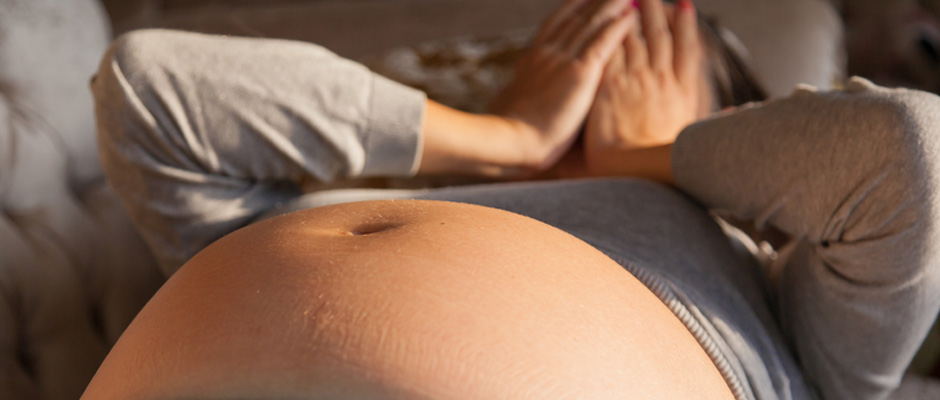
Being pregnant at 37 comes with its own bag of stress factors, including being labeled a “geriatric mother” à la Bridget Jones. But being pregnant at 37 with endometriosis takes the worry factor to skyscraper heights. I should be worrying about what theme I want to make my baby’s nursery or which baby shampoo is safest to use, but instead, I’m on a merry-go-ground of doctor’s appointments and fear that has left me Googling until the wee hours of the morning.
Before I could even consider trying to safely conceive, I had to endure countless painful tests and multiple surgeries to remove a uterine fibroid the size of a six-month-old fetus and a chocolate cyst that choked out my left ovary, which my doctor removed. I miraculously gave birth to my first son in 2014 at the age of 34. I was given a less than 13 percent chance of ever conceiving and IVF was never an option for me because the drugs I would’ve had to take were going to make my endometriosis spread like wildfire.
But after a lot of specialized care and prayer, I beat the odds and delivered a healthy 8-pound, 9-ounce bundle of joy.
Three years later, I was overjoyed to become pregnant again. But with much more concern this time about complications due to my age and a more advanced case of endometriosis. Every time I peed, I was terrified I was going to see blood. On Dec. 15, my worst nightmare came true. I got my son dressed to take photos with Santa at our local mall. I decided to hit the bathroom one more time before heading out.
When I reached down to wipe myself, a meteor shower of bright red blood and large clots washed over my hand. I immediately burst into tears and felt completely paralyzed. I was eight weeks pregnant at the time and still very much in the danger zone for miscarriage. Also, I had recently remembered reading an article. Which said women with endometriosis are 76 percent more likely to have a miscarriage than women without the condition. Knowing the facts, I felt like hope was literally going down the toilet.
I gently placed the largest clot, which was about the size of a 5-ounce steak, on a tissue near my sink, and wondered: “Is this, my baby?” It was the worst feeling I had ever felt. I was helpless—frozen on my toilet convinced my miracle had just disappeared. My fingers cramped up as I attempted to dial my husband, who was still at work, and my aunt Maryann, who I was planning to pick up on my way to the mall. I could hardly speak. “I think I’m having a miscarriage,” I wailed into the phone.
My aunt told me not to move and that she was on her way. My granny came to watch my 3-year-old son as Maryann picked me up and drove me to the ER. As I walked in, with blood pouring down between my legs, I tried with every cell in my body not to let any more of that blood spill out. A nurse immediately got me a wheelchair once he realized the condition I was in.
I was quickly taken to a bed, administered an IV, and assured a doctor was coming to check on me. As I lay there, I sobbed thinking of all the maternity clothes I had just ordered from Old Navy and how I didn’t want to even open the packages if I was, in fact, having a miscarriage. My heart remained optimistic while my mind took me to a dark place where I was contemplating if I should start planning my baby’s funeral. I didn’t even know if it was a girl or boy yet, but this child already had my heart. If need be, in that instant, I would’ve traded my life. I cried, I cursed, and I prayed silently in my head as I waited for answers.
After about 40 minutes, which seemed like an eternity. I was rolled into a sonogram room. Where the sonogram tech was stoic and harder to read than a Calculus book. “What’s happening?” I pleaded.
“Is my baby still alive? Can you see my baby?”
She urged me to calm down and told me she wasn’t allowed to tell me anything until the doctor came in. “Please, I am begging you to tell me something. I feel broken. Is my baby alive?”
And then, she showed me his beautiful little body with his arms and legs perched in battle mode. The child seriously appeared to be posed in the stance of the Fighting Irish leprechaun from Notre Dame. An ocean of relief washed over me. I was too thankful to speak. I just let out a big cry of gratitude.
When the ER doctor met with me and examined me, he determined it was likely a hematoma. His prognosis was very matter-of-fact. “It’s either going to be ok, or it’s not,” he said. “Let’s stay positive and hope for the best.”
I was then handed a bunch of papers with the terminology “Threatened Abortion” on them. My pregnancy was now like a dangling treasure almost out of reach and balancing off a cliff. It was hard to stay calm and take it easy, but in the following weeks, I had no choice but to do just that. I was placed on pelvic rest and had to refrain from exercise, sex, and other activities I normally did.
I am now five months pregnant with my little boy who I have lovingly nicknamed “The Fighting Irish”. Because he is a fighter just like I am. I am still high risk and routinely visit a perinatologist now in addition to constant visits to my OB-GYN. Endometriosis has caused my pregnancy to be a rollercoaster ride, including causing false positives on tests and causing me more pain than if I didn’t have the disease. I’ve also been warned: antepartum bleeding tends to be more common among women with endometriosis. But my baby and I are survivors, and while I’m not out of the woods just yet, I’m not out of hope and strength, either.
We’re in this together. ( Article was first published here)
ALSO SEE: TIPS FOR DEALING WITH MORNING SICKNESS
About EndoFound: The Endometriosis Foundation of America strives to increase disease recognition, provide advocacy, facilitate expert surgical training, and fund landmark endometriosis research. Engaged in a robust campaign to inform both the medical community and the public. The Endofound places particular emphasis on the critical importance of early diagnosis and effective intervention. While simultaneously providing education to the next generation of medical professionals and their patients.
Join us over at the PB Moms Exclusive Circle. Where we invite healthcare experts to prepare us for life after childbirth and motherhood. Go to: pregnancybeyond.com/exclusive-circle.
Follow PregnancyBeyond on Instagram, Facebook, and Twitter.
The post Pregnant With Endometriosis – My Scary Pregnancy appeared first on PregnancyBeyond.
]]>The post Endometrioses Success Story: Every Night I Prayed For My Baby appeared first on PregnancyBeyond.
]]>Endometrioses Success Story:
Endometrioses Success Story: “Every Night I Prayed For My Baby”, By Shenna Foster (Endometriosis Foundation of America).
March is Endometriosis Awareness Month. PregnancyBeyond has teamed up with EndoFound to raise awareness of this disorder. Also, fertility health issue that affects millions of women worldwide.
Today’s post is an endo success story; Reporter Diana Falzone is pregnant with a boy!
Reporter Diana Falzone has a bun in the oven!
Falzone, 35, reveals that she is four months pregnant with a boy.
“Every night I prayed for this child and to now see him on sonograms is a miracle”. Falzone tells The Blossom exclusively.

It’s a joyous surprise for the reporter who has been outspoken with her endometriosis struggle. “I’m still kind of shocked, honestly,” she says. “I have a bump, and I’ll brush my hand and be in disbelief that it’s there. I’m acutely aware of how many women struggle to conceive and don’t have that opportunity. I’ve been blessed. Every single week that goes by I’m closer to meeting my baby boy, and I’m so excited.”
The road to motherhood has been a bumpy one for the TV personality.
Back in February 2016, she had her first endometriosis-related excision surgery after months of dead-end doctor visits.
Then, in June 2017, Falzone was rushed into yet another excision surgery, where doctors discovered her uterus was fused to her abdomen.
Despite those setbacks, Falzone tells The Blossom she remained determined to one day become a mother, no matter what.
“When I was told I was infertile, I was, of course, heartbroken, but after the initial shock, I was determined to become a mother whether it meant biologically or through adoption. I was going to exhaust my options until I didn’t have any.”
After starting hormone therapy in September and embryo transfer in November, Falzone was forced to wait. “You have to tell yourself that whatever happens, you’ll be okay with it. Whatever is meant to be is meant to be. And there’s a high failure rate. It’s an incredibly stressful time, it’s very emotional, and it’s very scary.”
Falzone says it isn’t lost on her how lucky she is to conceive despite having endometriosis. “I have heard from women. Who had to have hysterectomies due to endo and lost their dream of having a child. They are on my mind always. I hope the more the endo community continues to speak up, we will make a tremendous change, and a cure will happen in our lifetime.” ( Article was first published here)
ALSO SEE: MOM OF TRIPLETS PENS EMOTIONAL LETTER TO INFERTILITY
About EndoFound: The Endometriosis Foundation of America strives to increase disease recognition. Provide advocacy, facilitate expert surgical training, and fund landmark endometriosis research. Engaged in a robust campaign to inform both the medical community and the public. The Endofound places particular emphasis on the critical importance of early diagnosis and effective intervention. While simultaneously providing education to the next generation of medical professionals and their patients.
Join us over at the PB Moms Exclusive Circle. Where we invite healthcare experts to prepare us for life after childbirth and motherhood. Go to: pregnancybeyond.com/exclusive-circle.
Follow PregnancyBeyond on Instagram, Facebook, and Twitter.
The post Endometrioses Success Story: Every Night I Prayed For My Baby appeared first on PregnancyBeyond.
]]>The post 36 Weeks Pregnant Mom Has 2 Month Old Twins appeared first on PregnancyBeyond.
]]>36 Weeks Pregnant Mom:
This Mom is 36 Weeks Pregnant And Has 2-Month-Old Twins.
New York Fashion Designer, Althea Harper, and her husband wanted to add to their family.
They both already have a daughter together and decided to start trying for another baby, however, they had no success with conceiving. Battling with infertility, Althea and her husband made the decision to use a surrogate to carry their biological child.
Shortly after the surrogate became pregnant with their twins, then more good news – Althea discovered she was also pregnant!
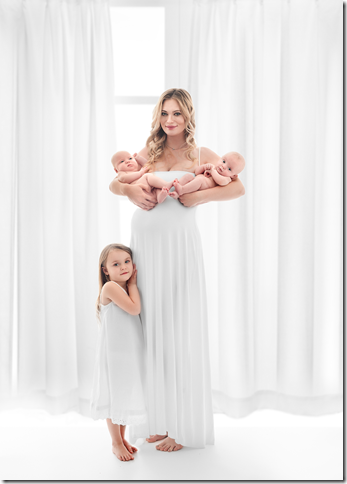
She is 36 weeks pregnant in this image with her two-month-old twins and older child.
What an amazing story. Congratulations Althea on your beautiful growing family, a true story of modern motherhood.
Thank you for sharing this photo and amazing story with us @glow_portraits
SEE ALSO: PHOTOS FROM THE ‘GRADUATION CEREMONY’ OF PREEMIES LEAVING THE NICU
Join us over at the PB Moms Exclusive Circle, where we invite healthcare experts to prepare us for life after childbirth and motherhood. Go to: pregnancybeyond.com/exclusive-circle.
Follow PregnancyBeyond on Instagram, Facebook, and Twitter.
The post 36 Weeks Pregnant Mom Has 2 Month Old Twins appeared first on PregnancyBeyond.
]]>The post Eight or Nine Miscarriages – Gabrielle Union appeared first on PregnancyBeyond.
]]>Eight or Nine Miscarriages
HEARTBREAKING: Gabrielle Union Reveals She’s Had Eight or Nine Miscarriages
If you make a purchase by clicking one of our links, we may earn a small share of the revenue that support our work, at no additional costs to you. (Learn more)
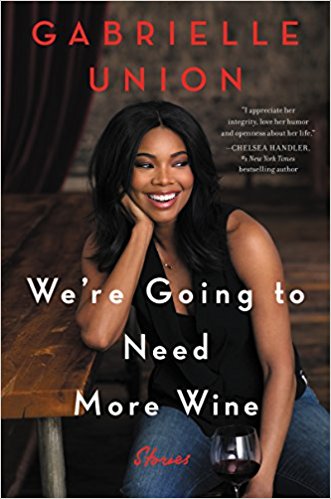
Gabrielle Union has opened up about her continued struggles with infertility in her new book We’re Going to Need More Wine.
Union, 44, who has been married to Dwyane Wade since April 2014 writes about her attempts at trying to conceive.
“I have had eight or nine miscarriages,” Union writes. “For three years, my body has been a prisoner of trying to get pregnant—I’ve either been about to go into an IVF cycle, in the middle of an IVF cycle, or coming out of an IVF cycle.”
While Union has previously spoken about her IVF journey, the Being Mary Jane actress has now opened up the heartbreaking details of her pregnancy struggles and how she has been dealing with the public pressure to conceive.
She goes on to say that while at first she wasn’t interested in having kids, her mind changed once she became a stepmom to Wade’s sons. And just like many women, she’s constantly asked whether or not she wants children:
“For so many women, and not just women in the spotlight, people feel very entitled to know, ‘Do you want kids?’ A lot of people, especially people that have fertility issues, just say ‘no’ because that’s a lot easier than being honest about whatever is actually going on. People mean so well, but they have no idea the harm or frustration it can cause.”
“Once a month I look like I’m in my second trimester because I’m bloated,” she continues in her book, explaining the side effects of IVF. “It leads to the questions and it leads to the rumors and anytime I go into a doctor’s office I feel like I’m a member of SEAL Team Six undercover because I don’t want people to speculate.”
Read more in Union’s book, We Are Going To Need More Wine out October 17 (Pre-Order Now)
Also Read: Pregnancy And Postpartum Depression
Follow Pregnancy & Beyond on Instagram, Facebook, and Twitter
The post Eight or Nine Miscarriages – Gabrielle Union appeared first on PregnancyBeyond.
]]>The post Polycystic Ovary Syndrome (PCOS) Success Story appeared first on PregnancyBeyond.
]]>Polycystic Ovary Syndrome (PCOS) Success Story
Success Story: How I Have Managed Polycystic Ovary Syndrome (PCOS).
In honor of PCOS Awareness Month and National Fertility Awareness Week (UK), Kemi Olowe who recently gave birth to a baby boy after a miscarriage (natural conception) and three rounds of IVF ; shares the story of how she got diagnosed with the syndrome at age 19 , and how she has been living with and managing the condition known as the Polycystic Ovary Syndrome.
We hope you find some encouragement and support from watching this vlog.
PART 1
In part 1 of the vlog, Kemi talks about the PCOS symptoms she is experiencing, how she got diagnosed, the impact of PCOS on a woman’s quality of life and how she went on to adopt a healthy lifestyle.
PART 2
In part 2 of the vlog, Kemi talks about the need to raise awareness on the effect of PCOS in the workplace and the provision of appropriate and non-judgmental support to employees; the importance of early diagnosis and intervention. She ended the vlog by giving a word of encouragement to PCOS warriors.
ALSO SEE: Top 6 Reasons To Call Your Doctor For Your Newborn
Find more of Kemi on her blog and on her Instagram account.
Follow Pregnancy & Beyond on Instagram, Facebook and Twitter
The post Polycystic Ovary Syndrome (PCOS) Success Story appeared first on PregnancyBeyond.
]]>The post Polycystic Ovarian Syndrome (PCOS) appeared first on PregnancyBeyond.
]]>Polycystic Ovarian Syndrome (PCOS)
Polycystic Ovarian Syndrome (PCOS): What You Should Know? By PCOS Awareness Association.
September is Polycystic Ovarian Syndrome (PCOS) awareness month. On the blog today, the PCOS Awareness Association (PCOSAA) explains the significance of increasing awareness about this condition that affects one in five women of childbearing age.
The Importance of Raising Awareness About Polycystic Ovarian Syndrome
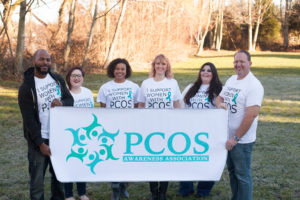 Polycystic Ovarian Syndrome or PCOS is an endocrine disorder that is widely spread among women of all ages. In present days, there are over 10 million women that are diagnosed with PCOS, this number exceeding the numbers of all breast cancer, lupus, multiple sclerosis, and rheumatoid arthritis combined.
The statistics show what a high frequency this illness has, which makes raising awareness among women about PCOS and its symptoms more than necessary. Having in mind that September is the PCOS awareness month, the timing couldn’t be better to talk about this illness and how can it affect women, so that we can take better care of ourselves.
Let us start with the basis. What is Polycystic Ovarian Syndrome? In spite of the fact that it is one of the most frequently met hormonal disorders among women, you won’t hear people talking about it too much. PCOS is not a medical topic that is too often debated, unlike other illnesses out there that don’t have the same incidence. PCOS is a hormonal imbalance in your body, causing uncomfortable symptoms both on the inside and outside of the body.
What is important to remember is that ovarian cysts may not be triggered by PCOS. There are cases in which the ovarian cysts have no connection with PCOS, being caused by something else. So cysts on the ovaries don’t mean you have PCOS. Although incurable, it is treatable.
There are ways to keep symptoms at bay and have a happier and pain-free life. Talking about symptoms, PCOS can produce a set of very uncomfortable symptoms, of which we can mention serious weight gain, loss of hair, feeling tired, depressed, suffer from panic attacks, headaches, dizzy spells, high levels of cholesterol, thyroid issues, sleeping problems, a constant feeling of thirst, cravings, mood swings, infertility, too much hair on the body and face, and others as well. If left untreated, polycystic ovarian syndrome can cause various severe diseases in time, such as cardiovascular diseases, type-II diabetes, hypertension, kidney problems, and even stroke.
ALSO SEE: Postpartum Infections and Pain | Treatment Tips
PCOS Awareness Association is fighting to raise awareness among women of all ages that they don’t have to suffer because of PCOS. This disorder can be kept under control and women that have it can lead a normal life. If you have any of the previously mentioned symptoms, don’t hesitate to ask for medical help and check to see if you have PCOS.
Our association can give you all the support you need to get the appropriate diagnosis, treatment, and aid in managing this condition with grace. Join our mission and let us help as many women as possible find out more about PCOS and ensure them that the condition is entirely treatable. No woman should suffer because of PCOS any longer.
Megan M Stewart
Founder of PCOS Awareness Association
www.pcosaa.org
The mission of the PCOSAA is to inform the public about Polycystic Ovarian Syndrome (PCOS) by providing information and resources for women to get tested, as well as providing support for women diagnosed with PCOS. Find more of them on their website.
Follow Pregnancy & Beyond on Instagram, Facebook and Twitter
The post Polycystic Ovarian Syndrome (PCOS) appeared first on PregnancyBeyond.
]]>