Giving Birth to your Baby: The Second Stage of Labor
(Scroll down for video of a mother pushing out her baby)
The second stage of labor also known as the pushing stage begins when the cervix is completely open (dilated) and lasts until you have pushed out your baby.
This stage of labor is also commonly referred to as the stage of expulsion. At this stage, your cervix is 10 centimeters open and fully dilated.
The pushing stage can take from a few minutes up to a few hours to birth your baby into the world. In most cases, it might take longer for first-time moms than women who have had a baby before.
A small number of women will require assistance with their births, either by forceps or ventouse (vacuum extraction). The obstetrician will choose which is best for your situation.
Forceps are smooth metal instruments that are shaped like large spoons or tongs. They’re curved to fit around the baby’s head. A forceps might be recommended if labor isn’t progressing or the baby’s safety depends on an immediate delivery.
With a ventouse(vacuum extractor), the obstetrician uses suction to attach a soft or hard plastic or metal cup onto your baby’s head.
Pushing
Your midwife may encourage you to follow your instincts when your body’s telling you to push, if you don’t want to do this, your midwife will guide you.
Only start to push when you feel the need to and during contractions. If you’ve had an epidural for pain relief, you might not feel the urge to bear down as strongly, so your midwife will tell you when to push.
Make sure to take relaxing breaths and read up on positions that are more effective for giving birth.
Related: Best labor and Birthing Position
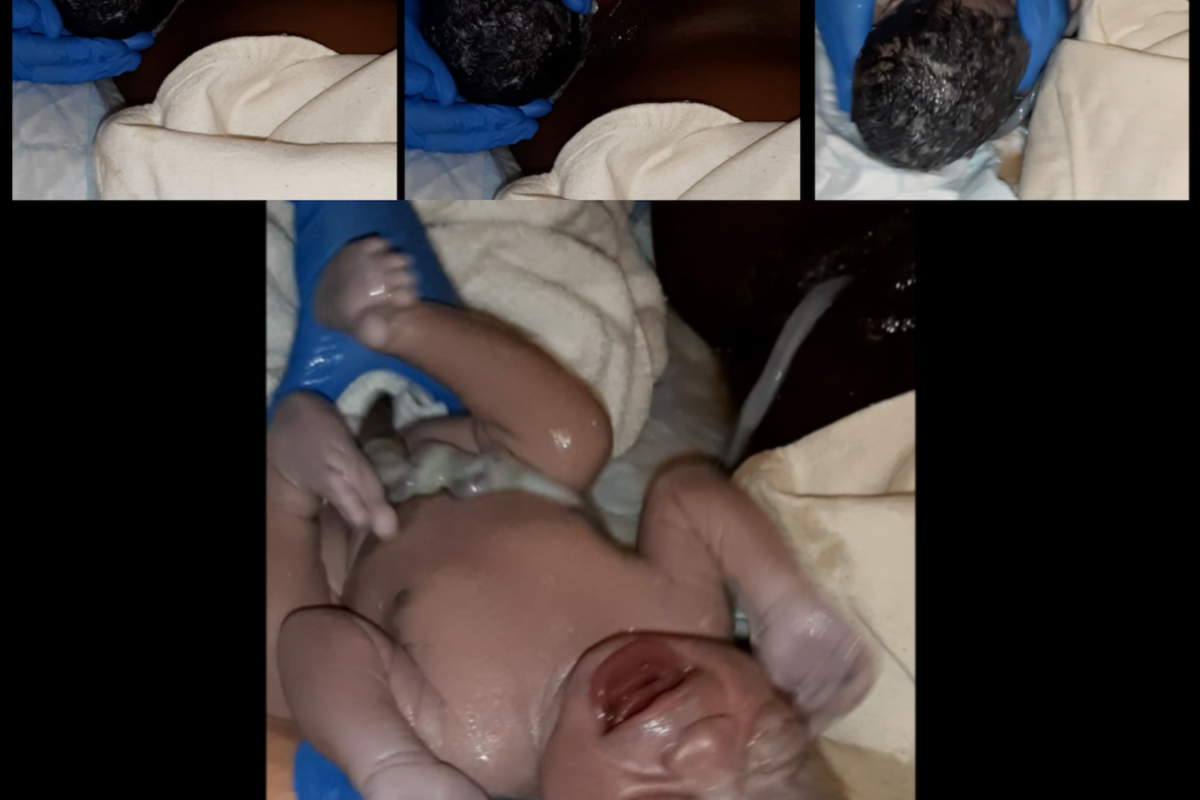
Crowning is the moment when your baby’s head moves down the vagina can be seen completely at your vulva.
Once your baby’s head is born, most of the hard work is over. Your baby may be born covered with a white, greasy substance known as ‘vernix’, which has acted as protection in the uterus. We would then recommend placing the baby in skin contact and allow you to have time together with your new baby.
https://www.instagram.com/p/B2Rpdb_l0pl/?utm_source=ig_web_copy_link
Watch this video of a mother pushing out her baby. Don’t forget to subscribe to our Youtube channel for more videos.
Join us at the PB Moms Exclusive Circle, where healthcare experts prepare you for life after childbirth and motherhood. Go to: pregnancybeyond.com/exclusive-circle.
Follow PregnancyBeyond on Instagram, Facebook, and Twitter.